Burnout

Burnout

Emotional exhaustion that rest doesn't restore.

13 articles tagged “Burnout

Burnout Articles

13 articles
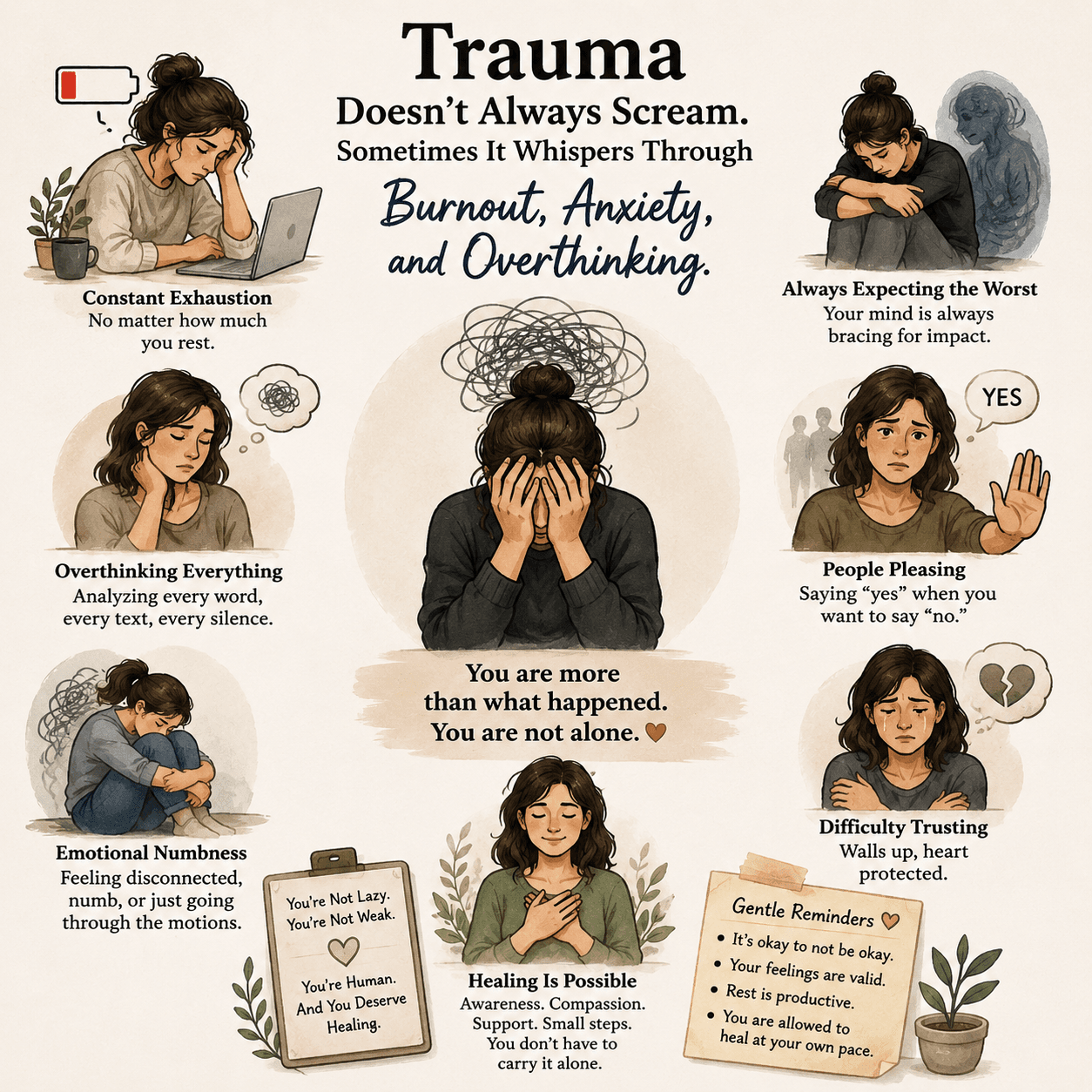
Trauma doesn’t Always Scream

Trauma doesn’t Always Scream

Trauma doesn't always announce itself with a clear memory or a named event — sometimes it shows up as chronic guilt, people-pleasing, or a constant low hum of dread. This post looks at the quieter ways trauma reshapes everyday thinking, and why changing the question you ask yourself can change everything.

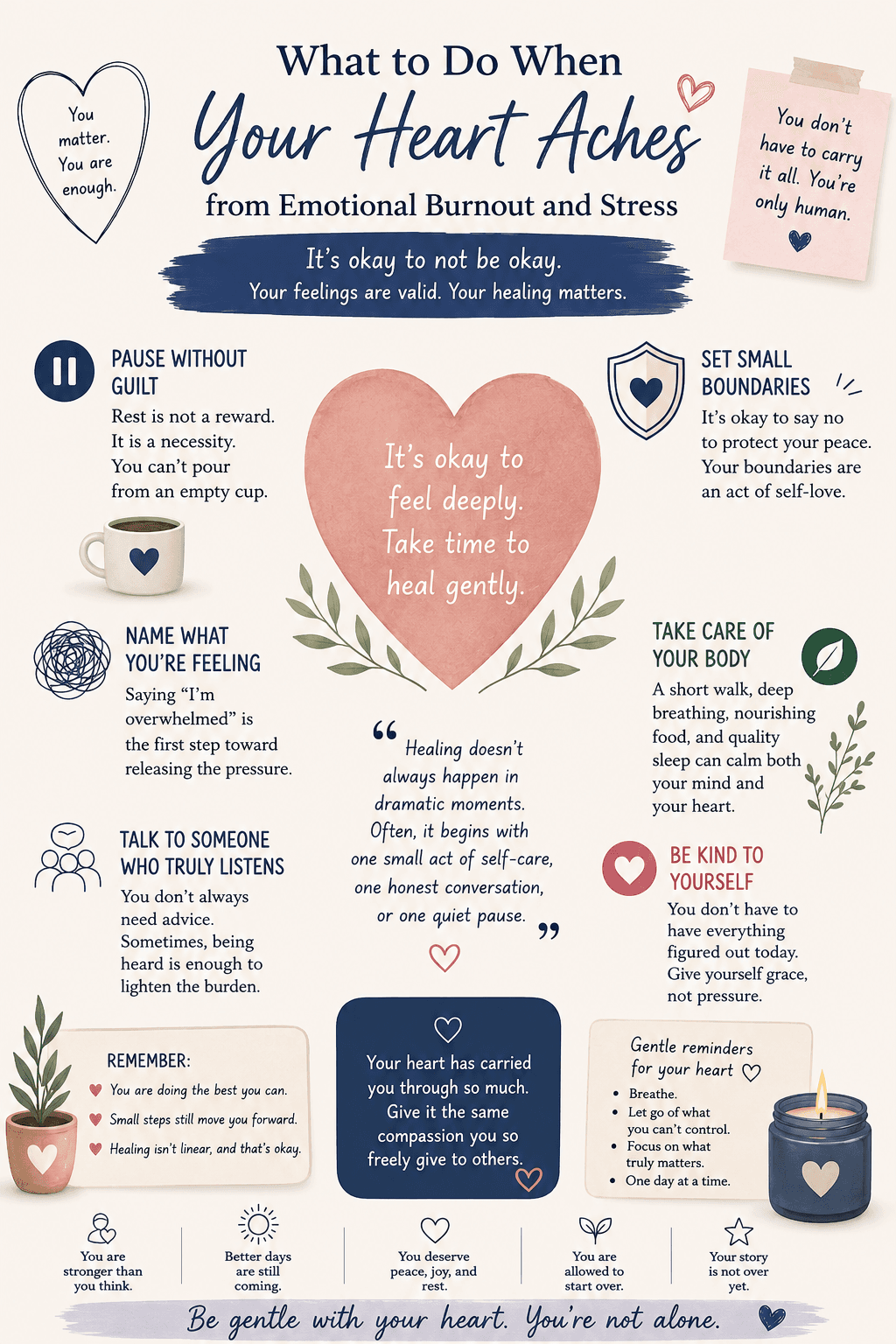
Emotional Burntout and Stress

Emotional Burntout and Stress

Sometimes the ache in your chest isn't about one specific thing — it's the accumulated weight of carrying too much for too long without enough support. This post looks at what emotional burnout actually feels like, why rest isn't optional, and what tends to help when being strong has stopped working.

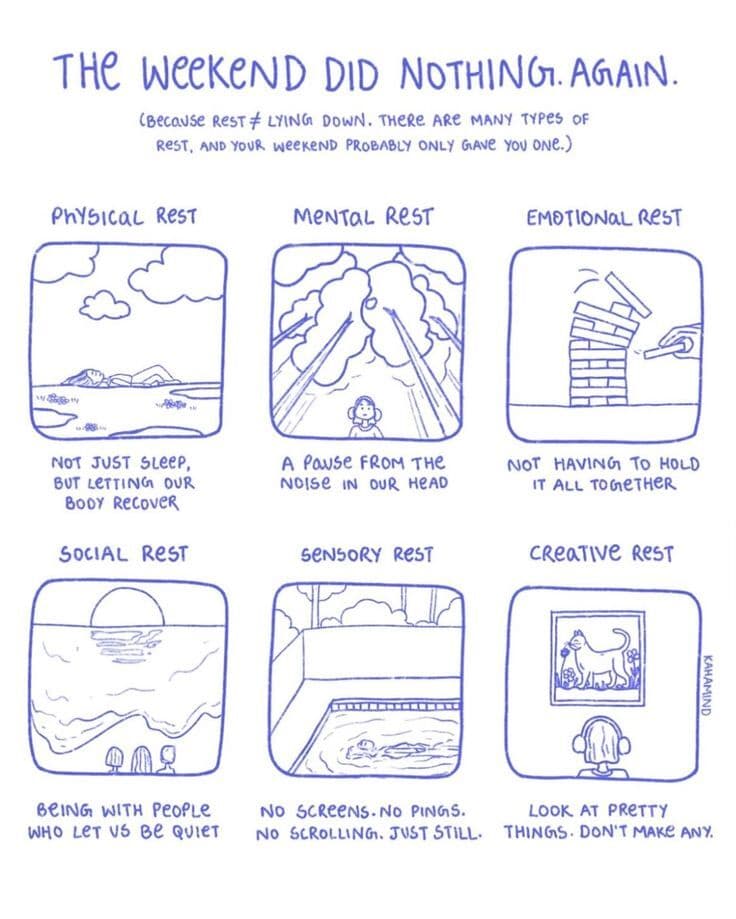
Why You're Still Tired on Monday — The Rest You Actually Needed vs the Rest You Got

Why You're Still Tired on Monday — The Rest You Actually Needed vs the Rest You Got

You slept in, took the weekend, tried to do the rest thing right — and Monday still feels like a wall. That's usually not a discipline problem. It's a category error: sleep addresses one kind of fatigue and you were carrying a different one. Here's the actual taxonomy.

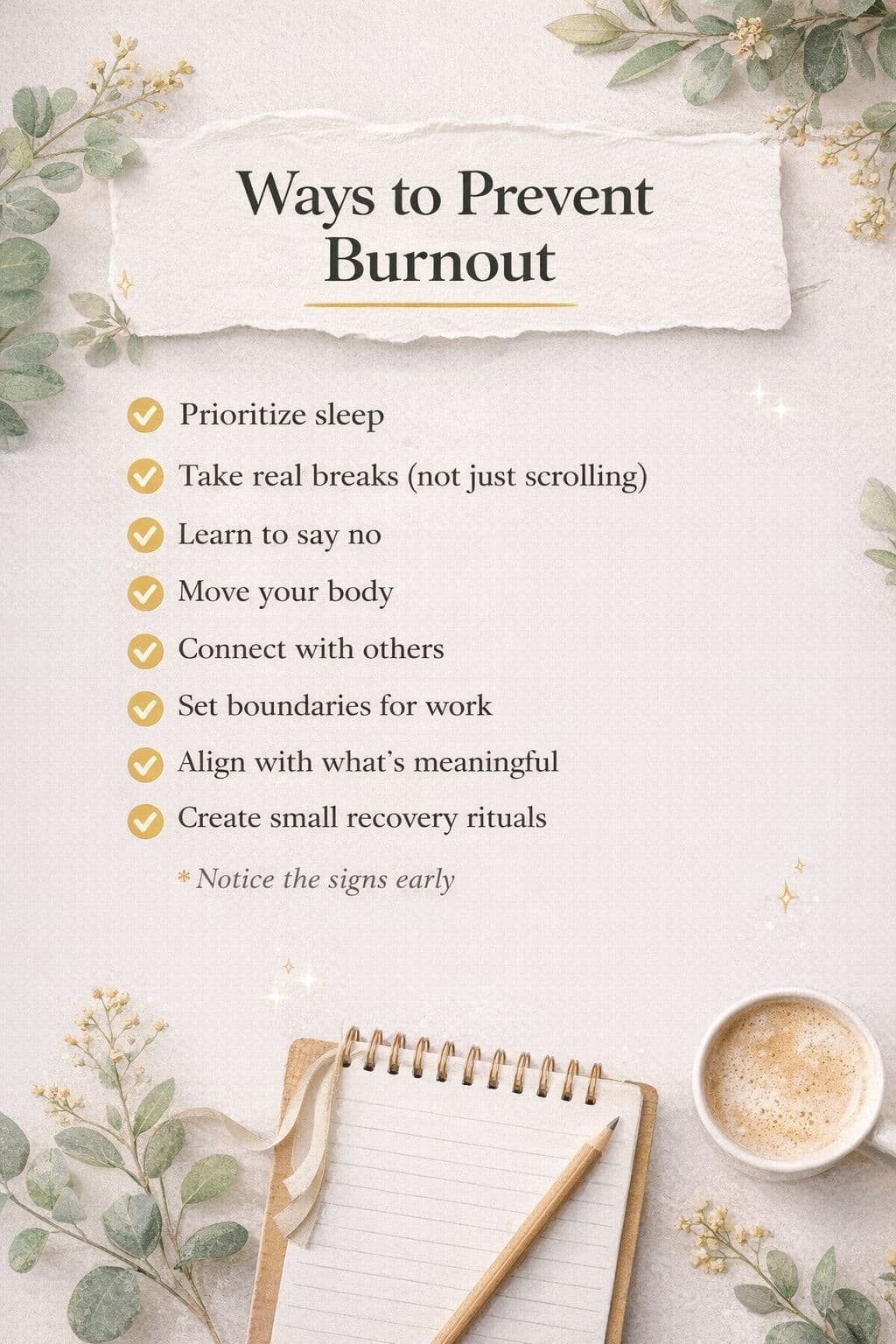
How to Catch Burnout Before It Catches You — the Early-Warning Guide

How to Catch Burnout Before It Catches You — the Early-Warning Guide

Nobody wakes up on Tuesday burnt out. It builds slowly across weeks and months of ignored signals, until suddenly you can't do the thing you used to do easily. Here's what the early-warning phase actually looks like and what to do about it before you're too depleted to act.

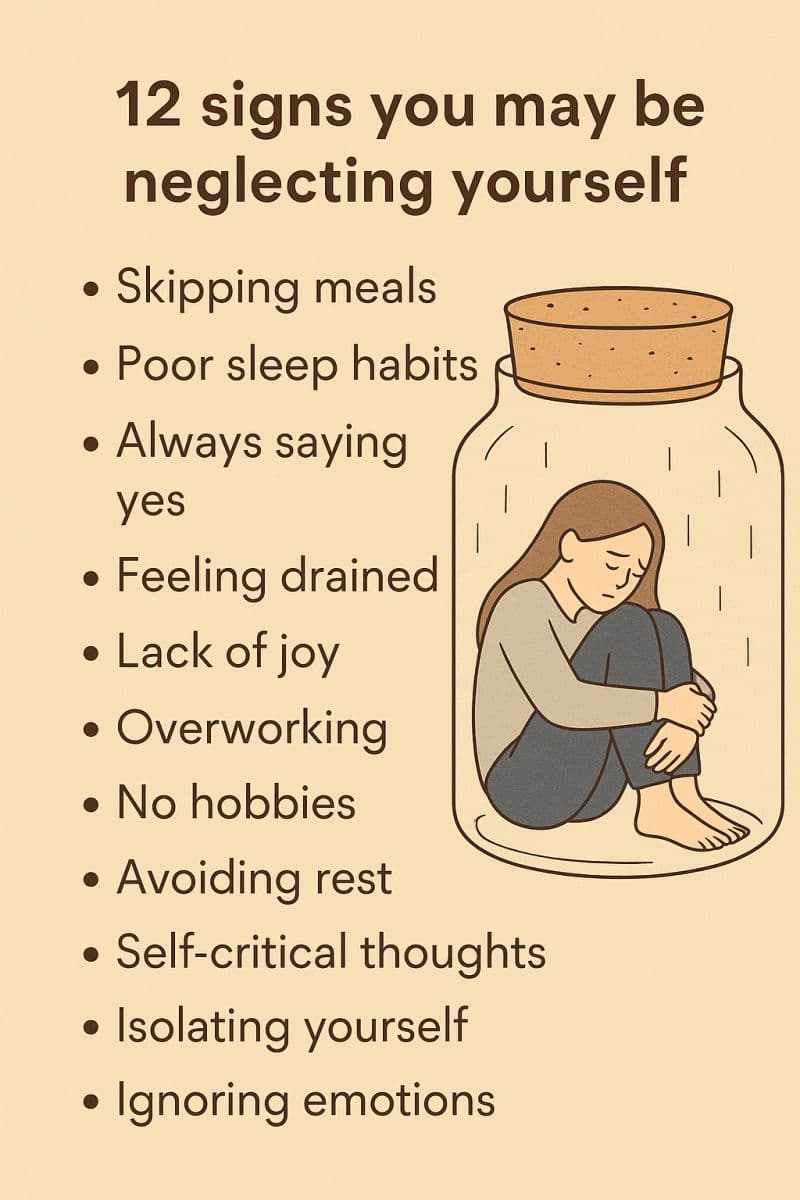
Self-Neglect Doesn't Feel Like a Crisis Until It Suddenly Is — Where It Actually Costs You

Self-Neglect Doesn't Feel Like a Crisis Until It Suddenly Is — Where It Actually Costs You

Nobody wakes up one day and decides to neglect themselves. It builds slowly — a missed meal here, a lost hour of sleep there, one more thing added to the load. Then months later everything is a little harder than it should be and you can't quite say why. Here's where the damage actually happens.

How to Say No Without Feeling Like a Bad Person — and Why Nobody Teaches This

How to Say No Without Feeling Like a Bad Person — and Why Nobody Teaches This

Saying no is easy in theory and awful in practice. Most people who overcommit don't do it because they can't think of the words — they do it because the guilt of saying no lands harder than the exhaustion of saying yes. This is about the actual skill, not the aphorism.

Why Discipline Beats Motivation on the Days You Don't Feel Like Doing It

Why Discipline Beats Motivation on the Days You Don't Feel Like Doing It

Motivation is what you feel on the good days. Discipline is what shows up on the medium and bad ones. Most of the meaningful things people build in a life get built on the medium and bad days. Here's why, and what to do when the motivation isn't there.

Self-Care Is Maintenance, Not a Reward You Have to Earn

Self-Care Is Maintenance, Not a Reward You Have to Earn

Most of us treat self-care the way we'd treat a spa day — a reward for surviving something hard. Actually it's more like brushing your teeth: the routine, unglamorous version prevents the emergencies that make people think self-care is dramatic in the first place.

Silent Burnout: When You're Falling Apart and Nobody Can Tell

Silent Burnout: When You're Falling Apart and Nobody Can Tell

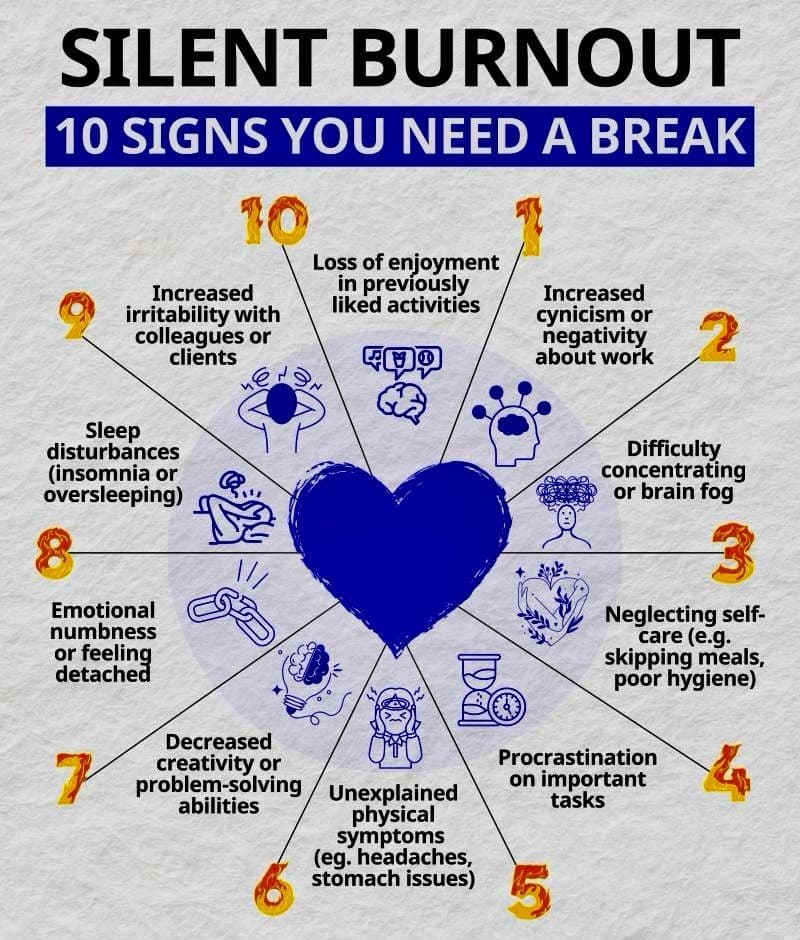
Some kinds of burnout are loud — the collapse, the tears, the leave-of-absence. Others aren't. This one wears your regular face to work and still hits deadlines. Everybody thinks you're doing great. You are not doing great. Here's how to notice it in yourself before it takes you out at the knees.

Does Working Too Much Actually Damage Your Brain? What the Research Shows

Does Working Too Much Actually Damage Your Brain? What the Research Shows

This piece looks at what the research does and doesn't support about the brain effects of chronic overwork — the parts that are genuinely well-documented, the parts that get overstated in popular writing, and what the honest picture means for how to protect yourself.

Am I Burned Out or Just Tired? Signs, Symptoms, and What Helps

Am I Burned Out or Just Tired? Signs, Symptoms, and What Helps

This piece looks at the difference between everyday tired and actual burnout, the quieter signs that show up before the collapse, and what recovery realistically looks like — the version where rest alone doesn't cut it and the pace has to change.

Why Working From Home Is Wrecking Your Mental Health (And What Helps)

Why Working From Home Is Wrecking Your Mental Health (And What Helps)

Working from home was supposed to be freedom. For a lot of people, it's turned into something quieter and heavier — days without a real conversation, weeks without leaving the house, and a low hum of anxiety that self-care advice doesn't seem to touch. This piece looks at what's actually happening to remote workers' mental health, and what genuinely helps.

Why Little Stresses Add Up (And What Actually Helps)

Why Little Stresses Add Up (And What Actually Helps)

Everyday stressors don't feel worth talking about — until they've stacked into something heavier. This piece looks at what happens in your body when small stresses accumulate, why they're harder to notice than big ones, and small habits that actually break the pattern.

Topics that show up alongside Burnout across the LissnUp blog.