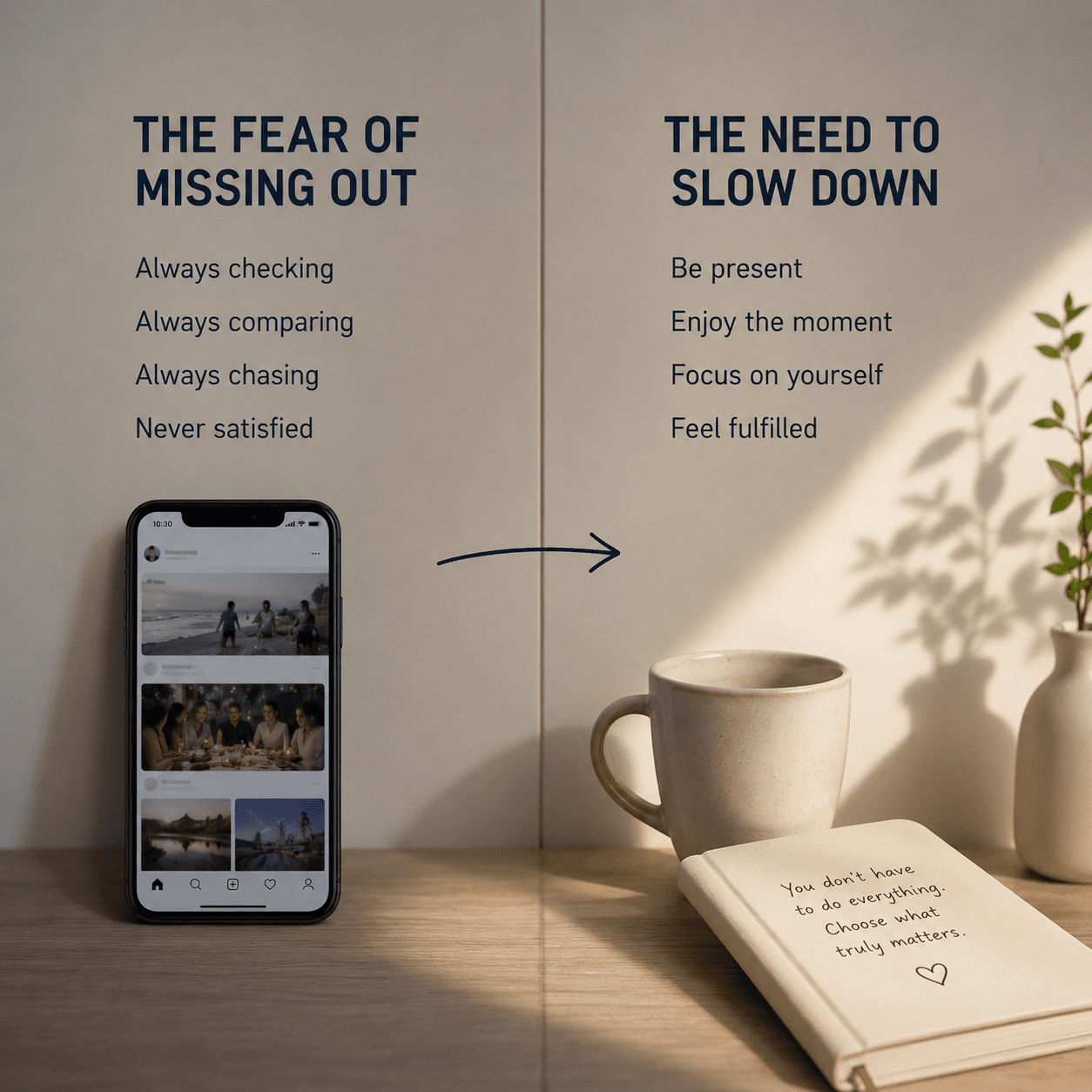
There's a specific kind of exhaustion that comes from feeling like everyone else is moving forward while you're standing still. This post is about why slowing down isn't the same as falling behind and what it actually costs you to never stop.
The Feed That Makes You Feel Late
Why Resting Starts to Feel Like a Risk
What You're Actually Choosing When You Slow Down
Guilt Is Not a Sign You're Doing It Wrong
How do I know if what I'm feeling is FOMO or just loneliness?
They can feel similar but they're pointing at different things. FOMO is usually triggered externally you see something someone else is doing and suddenly feel like you're in the wrong place. Loneliness is more of an internal ache that's there before you open your phone. If putting the phone down makes the feeling ease up, it's probably FOMO. If it doesn't, it's worth asking whether what you actually need is connection, not stimulation.
Why does rest feel unproductive even when I'm exhausted?
Because most of us have absorbed the idea that output equals worth and rest produces nothing visible. It's not a character flaw. It's a learned association, reinforced every time social media shows someone doing something impressive while you're lying on a couch. Recognizing the association is the first step to not being run by it.
Is saying no to things actually good for me, or is that just an excuse to avoid life?
Both can be true, and they're worth telling apart. Saying no because something doesn't fit your actual life right now is a reasonable act of self-awareness. Saying no because everything feels threatening is worth examining. The difference usually lives in how you feel after — relieved, or quietly more contracted?
How do I stop comparing my timeline to other people's?
You probably won't stop entirely comparison is a normal cognitive reflex, not a personal failing. What changes with practice is the pause between seeing and believing. Someone's promotion or wedding on Instagram is a single curated moment from a life you're not seeing in full. Your timeline is the whole movie; theirs is a highlight reel.