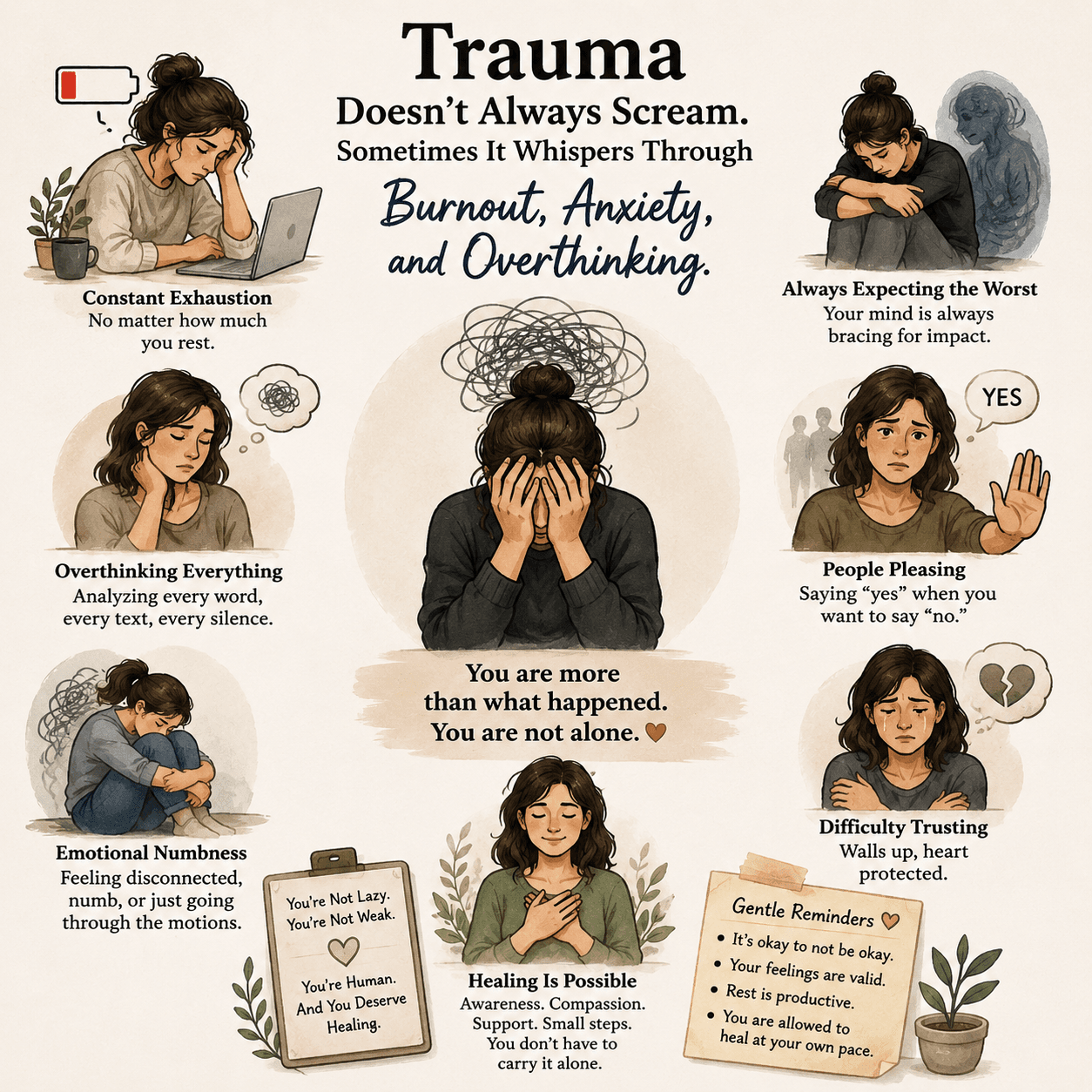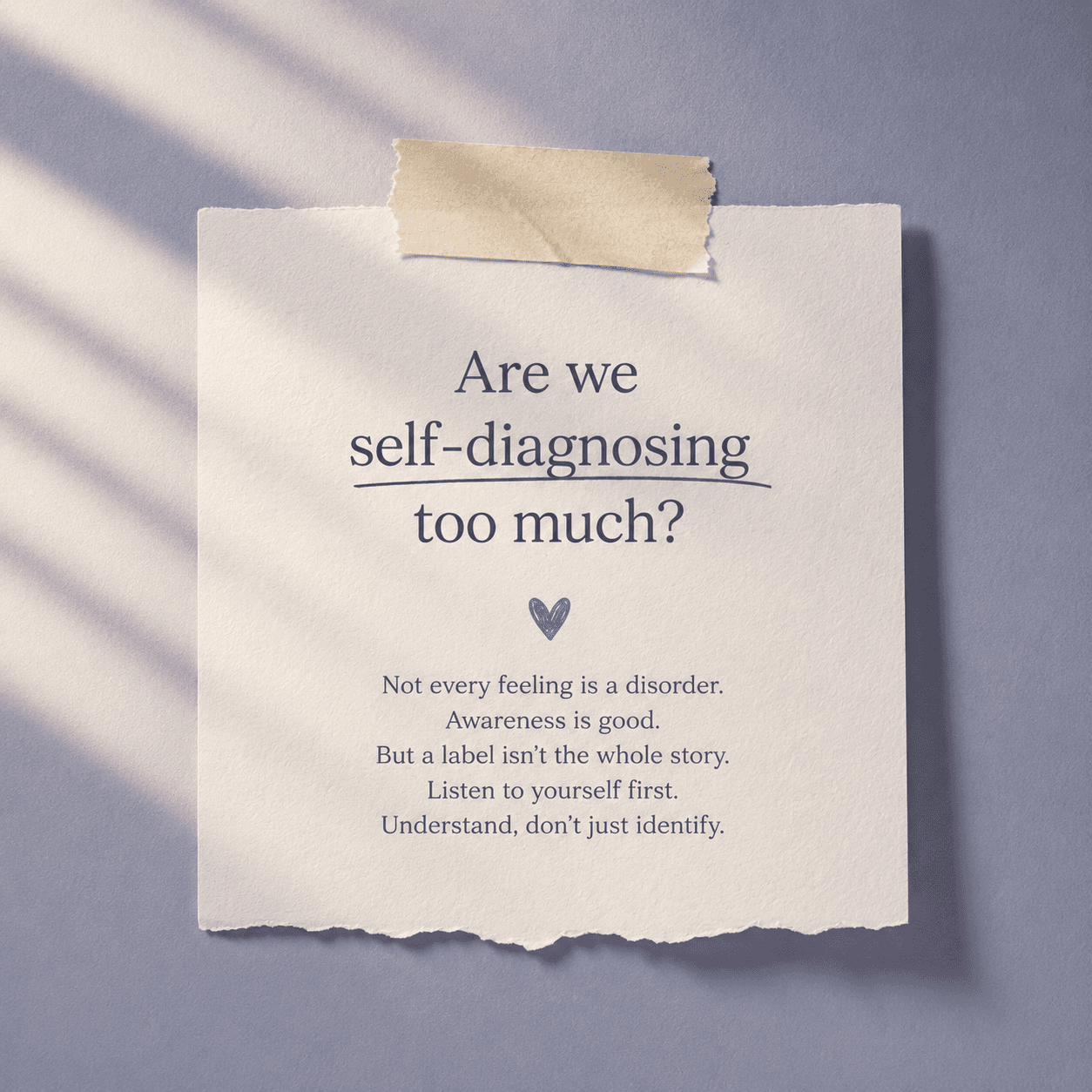
Social media has made it easier than ever to find a name for what you're feeling — and sometimes that recognition is genuinely useful. But a symptom list isn't a diagnosis, and this post looks at what self-diagnosis gets right, where it goes wrong, and what to do instead.
When a Label Feels Like Relief
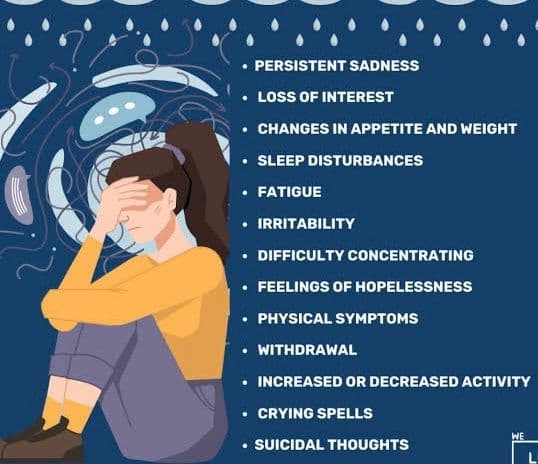
The Problem With Symptom Lists
Better Questions to Start With
What to Do If You're Genuinely Concerned
Is it wrong to look up my symptoms online?
Not wrong — but it's easy to mistake recognition for diagnosis. Reading about ADHD or anxiety can help you articulate what you're feeling, which is genuinely useful. The problem is when a relatable list of symptoms becomes a fixed conclusion. Use it to start the conversation with yourself or a professional, not to end it.
How do I know if what I'm feeling is a real disorder or just a normal emotion?
A useful starting point: ask how often it's happening, how intense it gets, and whether it's actually getting in the way of your daily life. Occasional distraction is human. Distraction that derails your work, relationships, and sleep most days is a different situation. A mental health professional can help you tell the difference — a TikTok video can't.
Why does mental health content online feel so personally accurate?
Because it's designed to. Mental health content tends to describe broad, common human experiences — difficulty focusing, feeling anxious, struggling with relationships — using language that sounds specific. Most people will recognise themselves in a list of ten symptoms when five of them apply to almost everyone sometimes. Recognition isn't the same as a clinical match.
Do I need a diagnosis to get support?
No. You don't need a label to deserve help, or to take what you're feeling seriously. Plenty of people benefit from talking through what's going on — with a friend, a therapist, or a trained listener — without any formal diagnosis attached to it. The feelings are real regardless of what they're called.
What should I actually do if I think I might have a mental health condition?
Start by noticing the pattern — when it happens, how often, what makes it worse. Then talk to someone: a doctor, a therapist, or a psychologist who can do a proper assessment. What you find online can be a useful first prompt to seek that conversation, but the assessment itself needs a real professional.