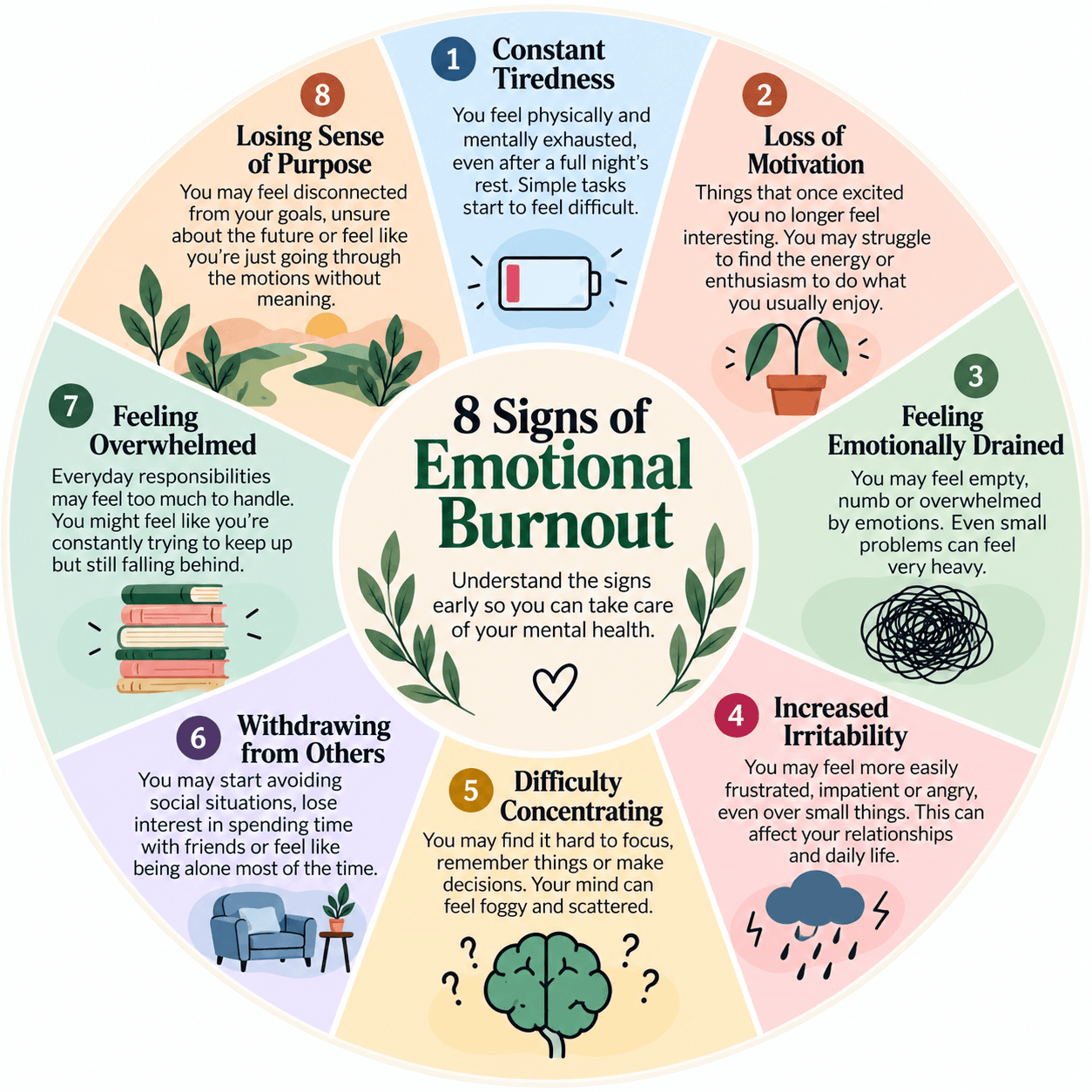
Emotional burnout doesn't always look dramatic it often shows up as a quiet flatness, a short fuse, a creeping sense that you're running on nothing. If some version of that has been following you around, here are eight signs worth paying attention to, and what they're actually telling you.
Exhaustion That Sleep Doesn't Fix
The Eight Signs
What These Signs Are Actually Telling You
Before You Hit Your Limit
How do I know if I'm emotionally burned out or just having a rough week?
A rough week has edges it ends when the stressor does. Emotional burnout is the version that lingers well past the triggering circumstances. If the tiredness, flatness, or irritability has been present for weeks or months and doesn't fully lift on rest days, that's worth taking seriously as a pattern rather than a passing phase.
Why am I so tired even though I'm sleeping enough?
Sleep addresses physical fatigue, but emotional exhaustion is a different kind of depletion one that sleep doesn't fully touch. If you've been carrying sustained emotional weight (caretaking, suppressing stress, managing difficult relationships, holding it together at work), your rest won't match the type of tired you actually are.
Can emotional burnout cause physical symptoms?
Yes, and this is more common than people expect. Sustained emotional load keeps the nervous system in a low-grade stressed state, which can produce real physical effects persistent fatigue, headaches, tension, disrupted appetite or sleep, and a general sense of physical heaviness. The mind-body connection here is genuine, not metaphorical.
What's the difference between emotional burnout and depression?
They share overlapping signs low motivation, withdrawal, emotional flatness which is exactly why it's worth seeing a doctor or therapist if the pattern is persistent. Emotional burnout often has a clearer link to sustained overload and can ease when the load reduces. Depression is a clinical condition with its own diagnosis and treatment path. If you're unsure which you're dealing with, that uncertainty is itself a reason to talk to a professional.
Do I have to hit rock bottom before I'm allowed to ask for support?
No and the rock-bottom standard is one of the more damaging myths in this space. Catching exhaustion early, when you still have some reserves left, is exactly when support is most useful. Waiting until you've completely collapsed doesn't make the need more legitimate; it just makes recovery harder.