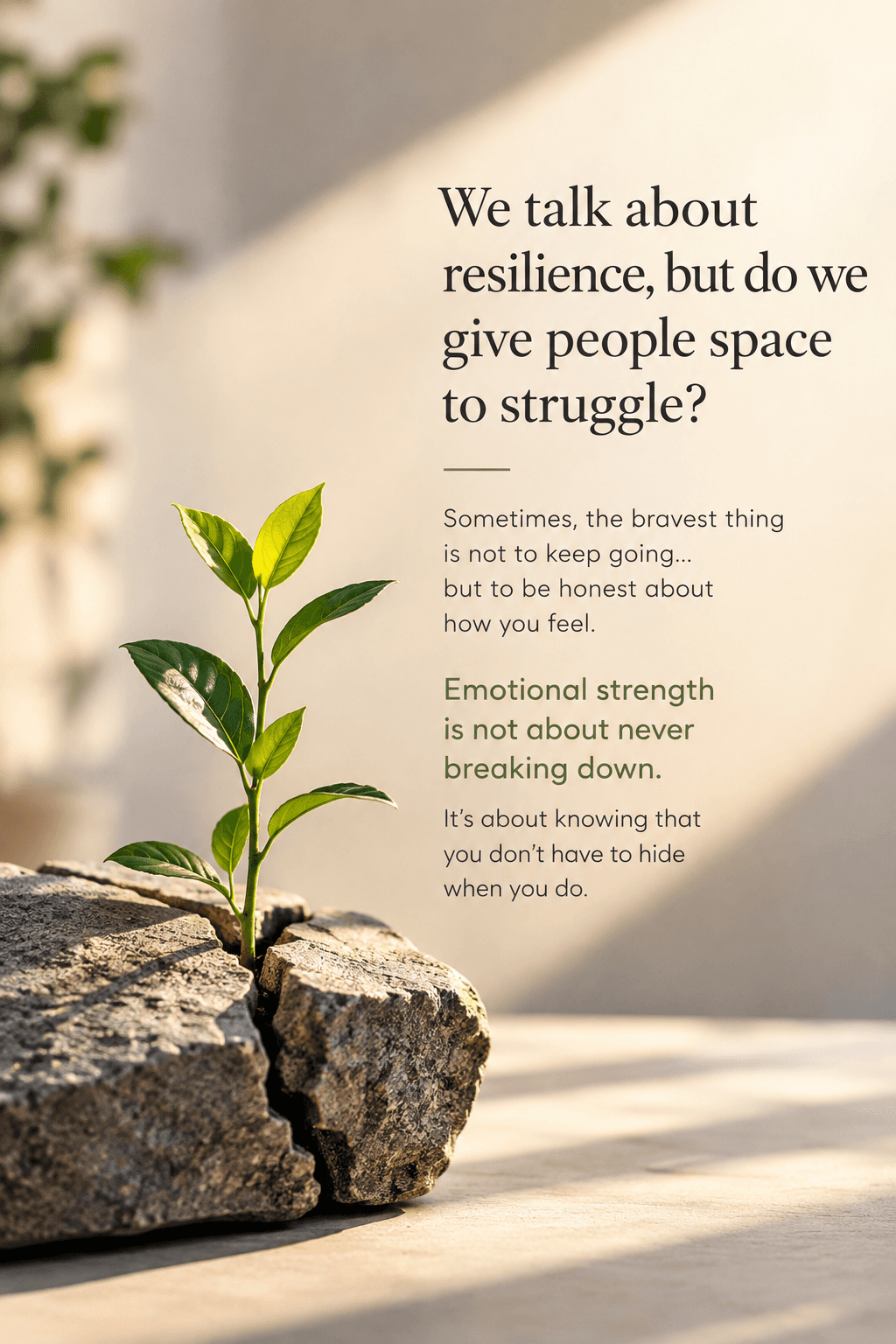
We've spent so long celebrating people who never complain, never crack, never ask for help that we've quietly made struggling feel like a failure. This post asks whether the version of resilience we're modeling is actually strength, or just well-dressed silence.
The Version of Strength We Accidentally Taught
What Resilience Actually Requires
The Thing People Actually Need
A Question Worth Actually Sitting With
Does being resilient mean I shouldn't fall apart?
No. Resilience was never about staying dry-eyed and unshaken it's about what happens after the falling apart. Someone who breaks down and then finds their footing again is showing exactly as much resilience as the person who looks composed throughout. The composed version is often just better at hiding.
Why does asking for help feel like I'm failing?
Because most of us grew up getting quiet signals that struggling visibly was a liability — that the person who held it together was the person worth respecting. That message sinks in early and doesn't leave easily. Needing help isn't a character flaw; it's a normal feature of being a person with limits.
How do I create space for someone I care about to actually be honest with me?
Start by not jumping to fix it. When someone tells you something hard, the instinct is to offer a solution or a reframe but that usually signals that their discomfort is a problem to be solved rather than a feeling to be heard. Try staying in the discomfort with them for a moment. Ask what they need before assuming you know.
What's the difference between real resilience and just suppressing how I feel?
Real resilience usually involves processing the hard thing feeling it, naming it, doing something with it. Suppression looks the same from the outside but leaves the feeling intact underneath, where it tends to show up later as irritability, numbness, or burnout. If you're 'fine' but exhausted by the effort of being fine, that's a useful signal.