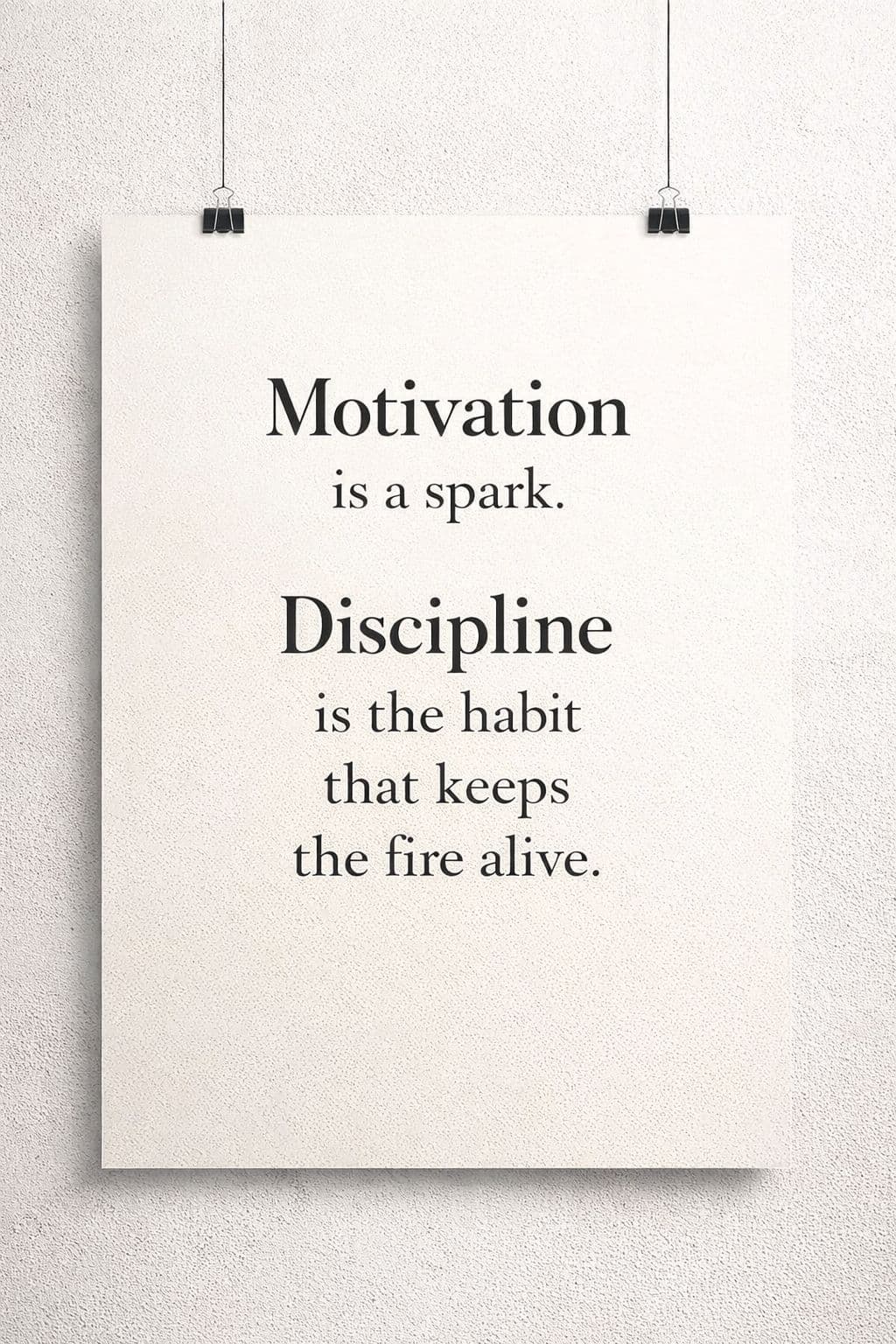
Motivation is what you feel on the good days. Discipline is what shows up on the medium and bad ones. Most of the meaningful things people build in a life get built on the medium and bad days. Here's why, and what to do when the motivation isn't there.
Motivation Is a Weather System
Motivation isn't reliable in the way we treat it. It comes in bursts — after a good sleep, at the start of a new year, at the end of an inspiring conversation, at the beginning of a project when everything still feels possible. And then it leaves. Not because you've done anything wrong, but because motivation is a mood, and moods pass.
Building anything meaningful — health, a craft, a relationship, a career, healing — on top of a mood is a losing strategy. Not because motivation is bad, but because it isn't consistent enough to load-bear.
Discipline is what does load-bear. Not the drill-sergeant version. The much quieter version: showing up on ordinary days when nothing feels extraordinary.
What Discipline Actually Is
Discipline gets a bad reputation as forcing yourself against your will. Practically, it looks more like this: having decided in advance what you're going to do, so that on the day itself you don't have to renegotiate with yourself about whether you feel like it.
The American Psychological Association's summary of the research on self-control notes that self-discipline is a better predictor of long-term academic and professional outcomes than IQ or talent alone. This finding, associated with Angela Duckworth's and Walter Mischel's research, is one of the most consistent in the field. The good news is that self-control is trainable — it isn't a fixed personality endowment, and small consistent practice reliably grows it.
The Actual Trick — Lower the Threshold
The single most useful move for people who struggle with consistency is to lower the bar for what counts as showing up. Not 'work out for an hour' — 'do ten pushups.' Not 'write for two hours' — 'write one paragraph.' Not 'meditate for twenty minutes' — 'sit still for two.'
The reason this works is that the hardest part is starting, not continuing. Once you're already doing it, extending is easy. And on the days when even the minimum is what you can manage, the minimum still counts — you didn't break the chain, you didn't confirm the story that you can't stick with anything.
Most consistency failures happen not from lack of willpower but from unrealistic thresholds. Nobody misses one day. People miss the third day in a row because they set the bar too high on days one and two and burned out.
Motivation Comes Back After You Start, Not Before
One of the counterintuitive parts of this is that the motivation you were waiting for usually shows up after you've already started, not before. Action produces momentum. Momentum produces evidence that you're the kind of person who does this. That evidence produces the feeling of motivation.
Which means the strategy of 'wait until I feel like it, then start' is backwards. The strategy that actually works is: start on a very small scale, without expecting to feel like it, and let the motivation catch up. On the days it doesn't — which will happen — the small-scale action still counts.
Be Suspicious of Advice That Blames You for Not Feeling It
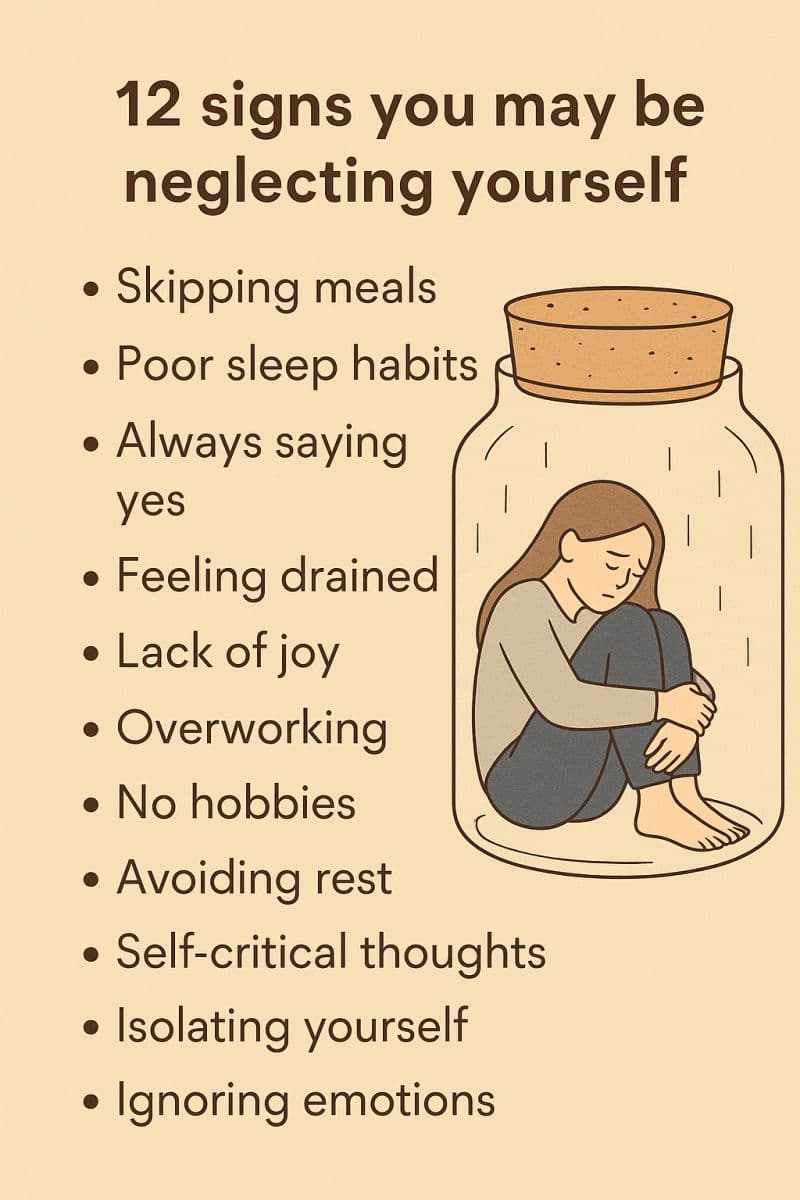
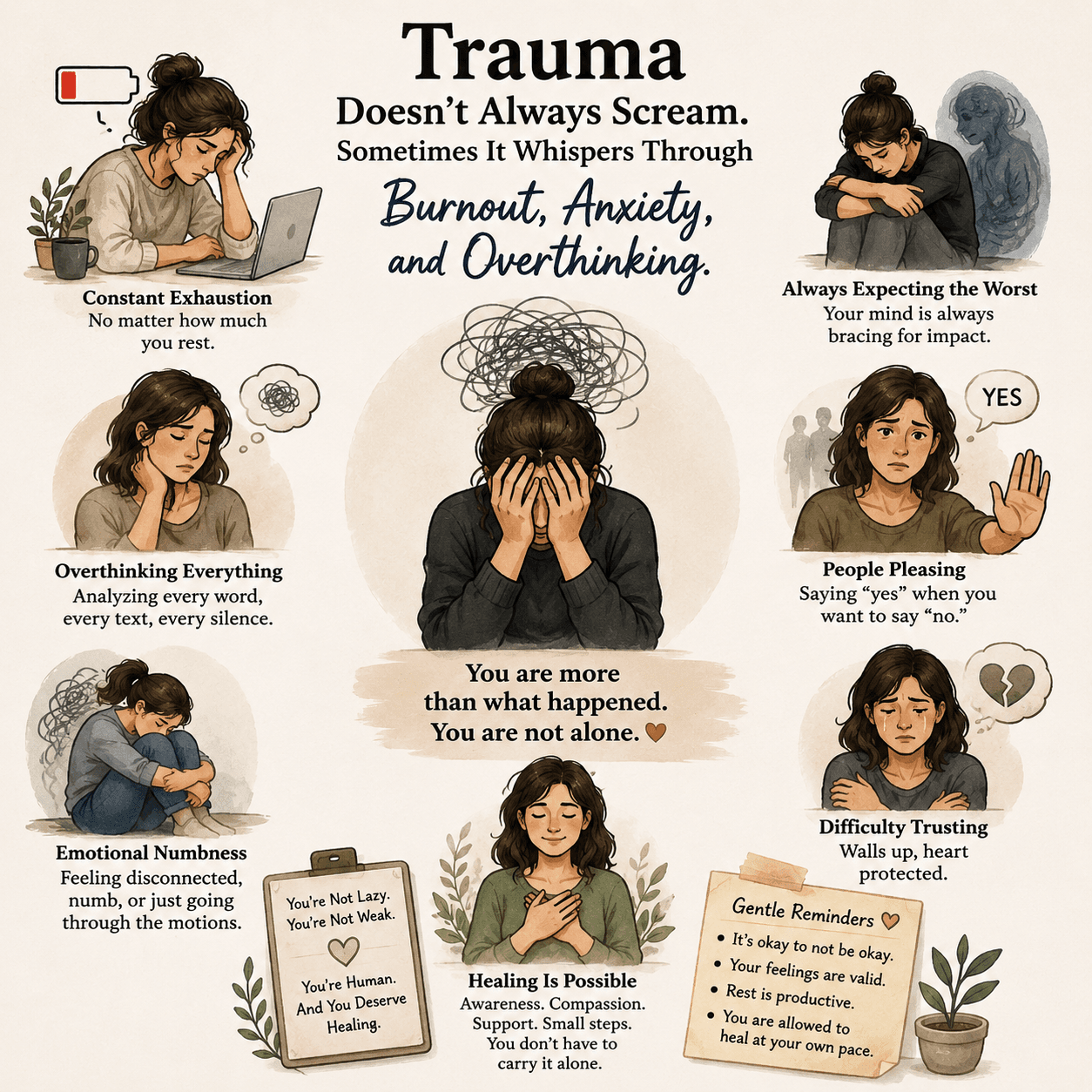
A lot of motivation content is unhelpful because it treats not-feeling-motivated as a moral failing rather than a normal fluctuation. If you've been running low for months, the answer usually isn't more discipline — it's addressing the underlying condition. Chronic exhaustion, unaddressed grief, silent burnout, real depression, and long-term stress all deplete the specific fuel that self-discipline runs on.
If that's the picture,
silent burnout is the closer diagnostic than any motivation article — the shape of your problem might be depletion, not undisciplined-ness. Getting more disciplined about a system that's already running on empty makes it worse, not better.
When It Helps to Say It Out Loud
Sometimes what's actually blocking consistency isn't the habit at all — it's something you haven't quite said out loud about why you keep quitting. A LissnUp listener is one specific option for that conversation: an anonymous adult with no stake in your project, no agenda about what you should be more disciplined at, and no interest in giving you the pep talk you don't need. Just the space to hear yourself think about what's actually going on. Not therapy and not a substitute for one — just an outside person, when an outside person is what's been missing.