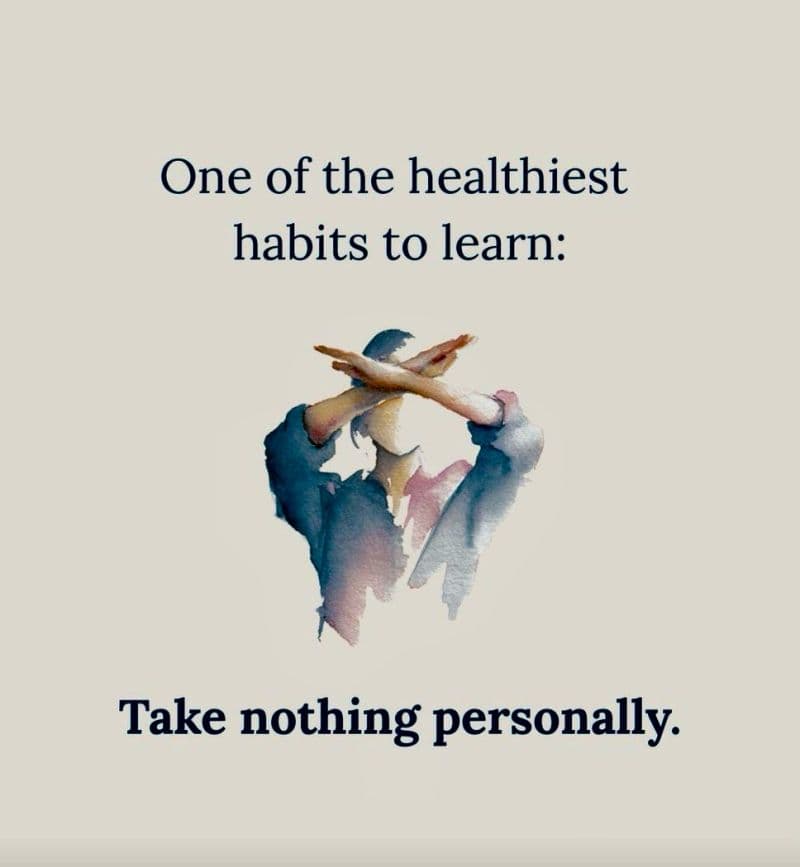
Most of what feels personal at work isn't. It's other people's pressure, deadlines, and internal weather showing up in your inbox. Learning to tell the difference — without becoming callous — is one of the highest-leverage career habits there is.
The Habit That Reclaims Your Evenings
Why This Isn't Callousness
The Pause That Does the Work
Detachment Isn't Distance
What to Do With the Ones That Really Are About You
When You Need to Talk It Through Without It Getting Weird at Work
Sources & Further Reading
How do I actually stop taking things personally at work?
Practice a specific pause between the moment something lands and the moment you start telling yourself a story about it. In that pause, ask whether this is really about you or about the other person's week. Most of the time you'll find it's the latter. When it is genuinely about you, the same pause helps you receive it accurately instead of defensively.
Is not taking things personally the same as not caring?
No. Not caring is disengagement. Not personalizing is being able to tell the difference between what's happening and what you're telling yourself about what's happening. You still care about the work, the relationships, and doing well. You just don't let every casual interaction get interpreted as a verdict.
Why do I personalize everything at work in the first place?
It's usually some combination of a real professional stake (you want to do well, you want to be respected), past experience of criticism that felt unsafe, and a nervous system that's been running hot. Naming the pattern is the first move. It gets easier with practice, and easier still when you have somewhere outside of work to process it.
How do I know if the criticism is real or if the person is just having a bad day?
Usually both are partially true. The delivery is often about their day; the underlying signal might still be worth hearing. Separate the two: don't accept the harsh delivery as the whole message, and don't dismiss the observation just because it was delivered badly. Ask a trusted colleague or an outside listener to help you tell them apart if you're too close to see clearly.