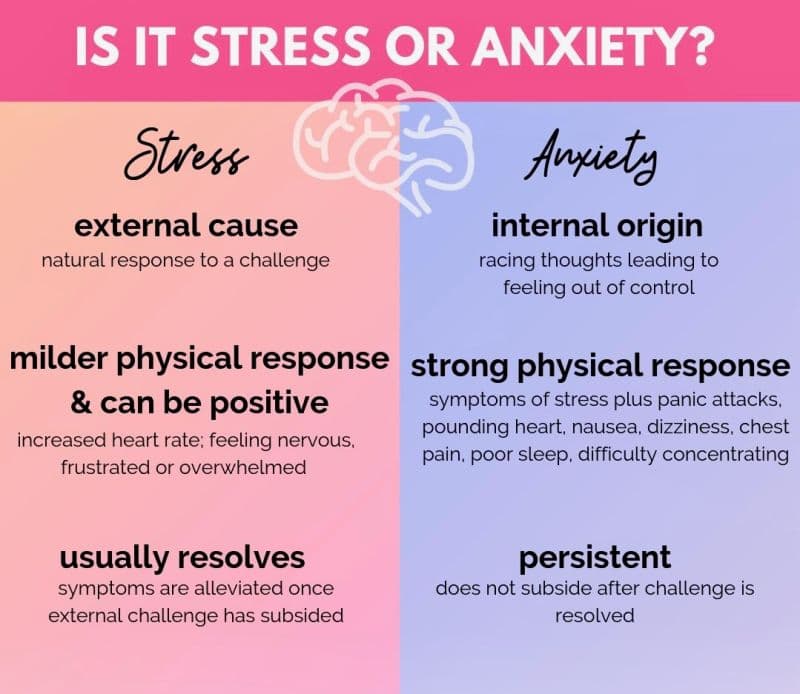
People use 'stressed' and 'anxious' the same way in conversation, but they behave differently — and the thing that helps for one won't touch the other. Here's the short version of how to tell which one you're in.
Same Feeling, Different Cause
Stress: A Response to Something Real
Anxiety: A State Without a Subject
Different Problems, Different Fixes
- Stress management is largely external. Fix the calendar. Say no to something. Delegate. Ask for the extension. Take the actual break. When the source of pressure is real and identifiable, the intervention is usually operational — you're changing the load, not just how you feel about it.
- Anxiety management is largely internal. Slow breathing (long exhale). Movement. Grounding. Sleep. Consistent basics. Anxiety usually doesn't respond to changing the external situation because it wasn't caused by the external situation to begin with.
The One-Minute Test
When It Helps to Say It Out Loud
Sources & Further Reading
What's the fastest way to tell stress from anxiety?
Ask whether removing the specific situation on your mind would remove the feeling. If yes, it's mostly stress. If no, it's mostly anxiety. Stress has an external cause and usually a solvable one; anxiety persists internally regardless of what's happening around you.
Can I have both at the same time?
Yes, and it's common. Chronic stress often produces anxiety, and existing anxiety makes you more reactive to stress. When they show up together, address the operational stress source AND do the internal-regulation work — not one instead of the other.
When does anxiety need professional help?
If it's been persistent for weeks, meaningfully interfering with sleep, work, or relationships, causing physical symptoms like chest pain or insomnia, or leading you to avoid situations you'd otherwise engage with — those are signals to talk to a clinician. Earlier is usually easier than later. Trust the instinct that says 'this feels bigger than everyday.'
Is short-term stress actually bad?
No — short-term stress is your alert system working correctly. It helps you focus, meet deadlines, and rise to real challenges. The problem is chronic stress: the alert system running without pause. Occasional pressure is fine. Constant pressure over months is what does the damage.