You slept in, took the weekend, tried to do the rest thing right — and Monday still feels like a wall. That's usually not a discipline problem. It's a category error: sleep addresses one kind of fatigue and you were carrying a different one. Here's the actual taxonomy.
The Confusing Version of Being Tired
The Categories, Plainly
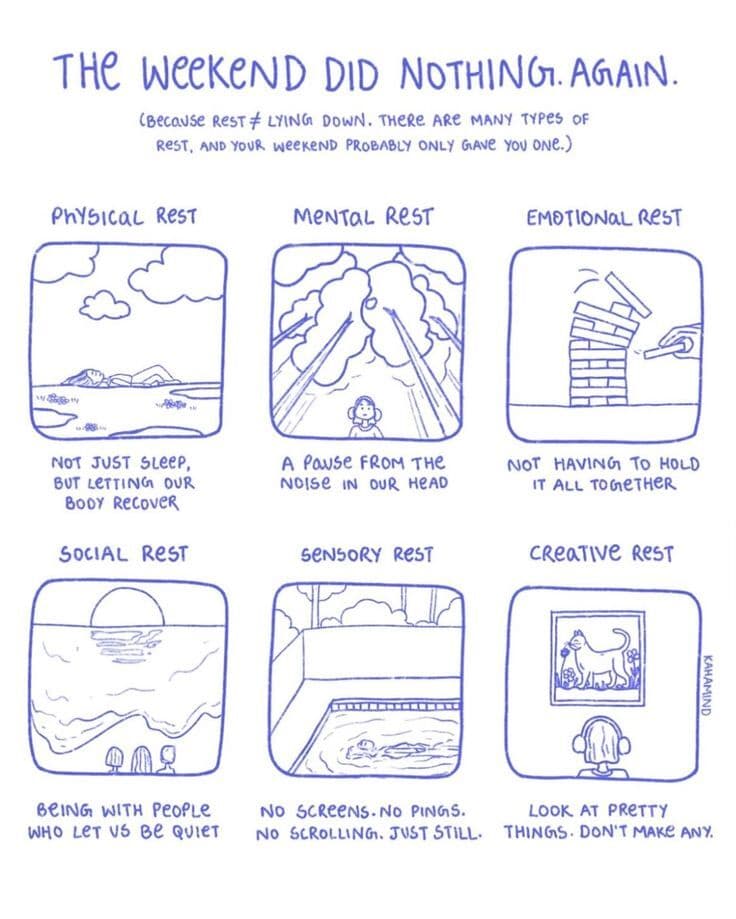
- Physical rest — sleep, plus passive rest (lying down, not moving). Fixes body tiredness.
- Mental rest — a break from cognitive load, decision-making, and information intake. Fixes 'my brain feels full.'
- Emotional rest — space where you don't have to hold anything together for anyone else. Fixes the specific exhaustion of caretaking or performing okayness.
- Sensory rest — reduced screens, noise, visual input, notifications. Fixes the 'buzzing' overstimulated feeling.
- Social rest — either time away from people, or time with the specific people who don't cost you anything. Fixes the 'I've had enough of everyone' fatigue.
- Creative rest — exposure to beauty, art, or nature without productivity attached. Fixes the 'I can't come up with anything anymore' fatigue.
- Spiritual rest (however you interpret that) — connection to meaning, purpose, or something bigger than the transactional layer of life.
How to Actually Diagnose Which One You Need
The Weekend That Actually Works
- Sleep enough that physical fatigue is off the table.
- Actually turn off notifications for meaningful stretches (sensory + mental rest).
- Do at least one thing that produces nothing (walk, garden, look at art, sit outside) — creative rest doesn't require you to be creative, just to be exposed to interesting input without a task.
- Spend some time with a person whose company doesn't cost you anything, AND some time alone, in whatever ratio fits what depleted you.
- Say the thing you've been holding, to somebody. That's emotional rest — the release of what you've been carrying alone.
The Kind of Rest LissnUp Is
Sources & Further Reading
Why am I still exhausted after a whole weekend?
Because sleep and time off address physical fatigue, and you were probably also carrying mental, emotional, sensory, or social fatigue that sleep doesn't touch. The fix isn't more sleep — it's identifying which category of tired you're in and giving yourself the specific kind of rest that matches.
What are the different types of rest?
The Dalton-Smith framework identifies seven: physical, mental, emotional, sensory, social, creative, and spiritual. Most people reliably get physical rest and occasionally social rest, and leave the others chronically undersupplied. Which ones you need depends on what depleted you the previous week.
How can I make weekends actually restorative?
Diagnose the specific depletion first, then match the intervention. Big mental load last week? Reduce decisions and screens. Emotional load? Find somewhere to say the things you've been holding. Sensory overload? Silence, darkness, no phone. Weekends fail as recovery when we default to the same generic rest regardless of what needs recovering.
Is Monday fatigue a sign of burnout?
Sometimes. Occasional Monday drag is normal. Consistent Monday exhaustion despite reasonable weekends, plus muted interest in work, plus rising irritability or reliance on caffeine to function, is worth taking seriously as an early-burnout signal. It usually indicates the weekday-to-recovery ratio has been off for a while.