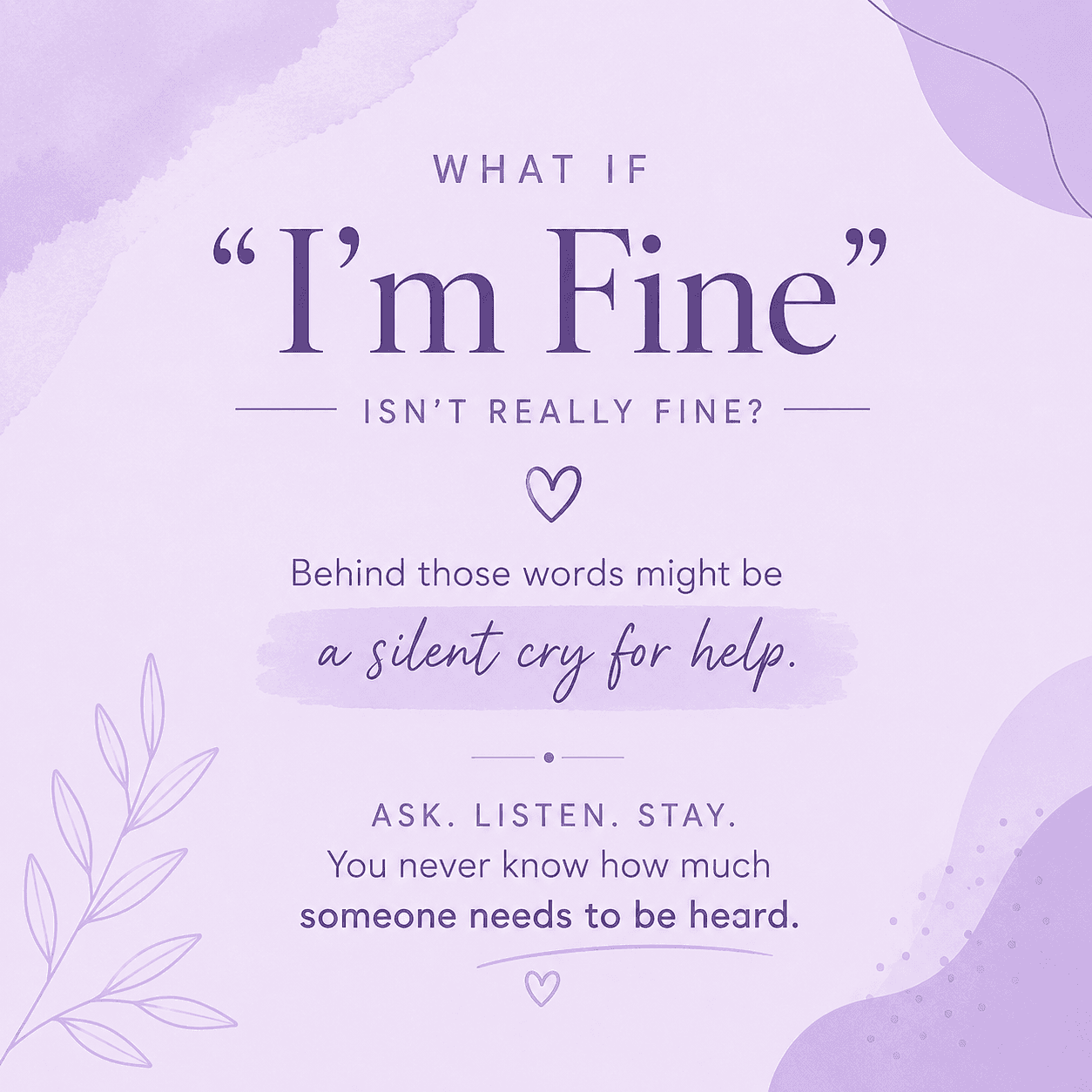
You can be reachable around the clock, surrounded by people, and still go to sleep feeling like nobody actually got what you were trying to say. This post is about why being connected and being heard are two completely different things — and what genuine listening actually looks like.
Connected Isn't the Same as Heard
What Most Conversations Actually Are
What Genuine Listening Actually Looks Like
The Question Worth Asking Differently
Why do I feel unheard even when I'm constantly talking to people?
Being in frequent contact isn't the same as being genuinely listened to. Most conversations involve someone waiting for their turn to speak, offering advice, or redirecting to their own experience. The feeling of being heard requires someone who stays present with what you're actually saying — not just the surface of it.
What's the difference between someone listening and someone actually hearing me?
Listening can be passive — someone physically present while their attention is elsewhere. Being heard means your words landed somewhere: the other person understood the feeling behind them, not just the facts. That difference is small in practice but enormous in how it feels.
Why does being unheard feel so bad, even when nothing dramatic happened?
Humans are wired for social acknowledgment. When we share something and it doesn't land — when it gets redirected, minimized, or met with a quick fix — the nervous system registers that as a mild form of rejection. It doesn't need to be dramatic to sting. Over time, repeated experiences of not being heard quietly erode the impulse to share at all.
Is it normal to feel alone even when I have people around me?
Very. Loneliness isn't really about the number of people present — it's about the quality of connection. You can be surrounded all day and still carry something nobody has actually helped you put down yet. If that's a consistent pattern, it's worth paying attention to, not dismissing.
How do I ask for what I need when I just want someone to listen?
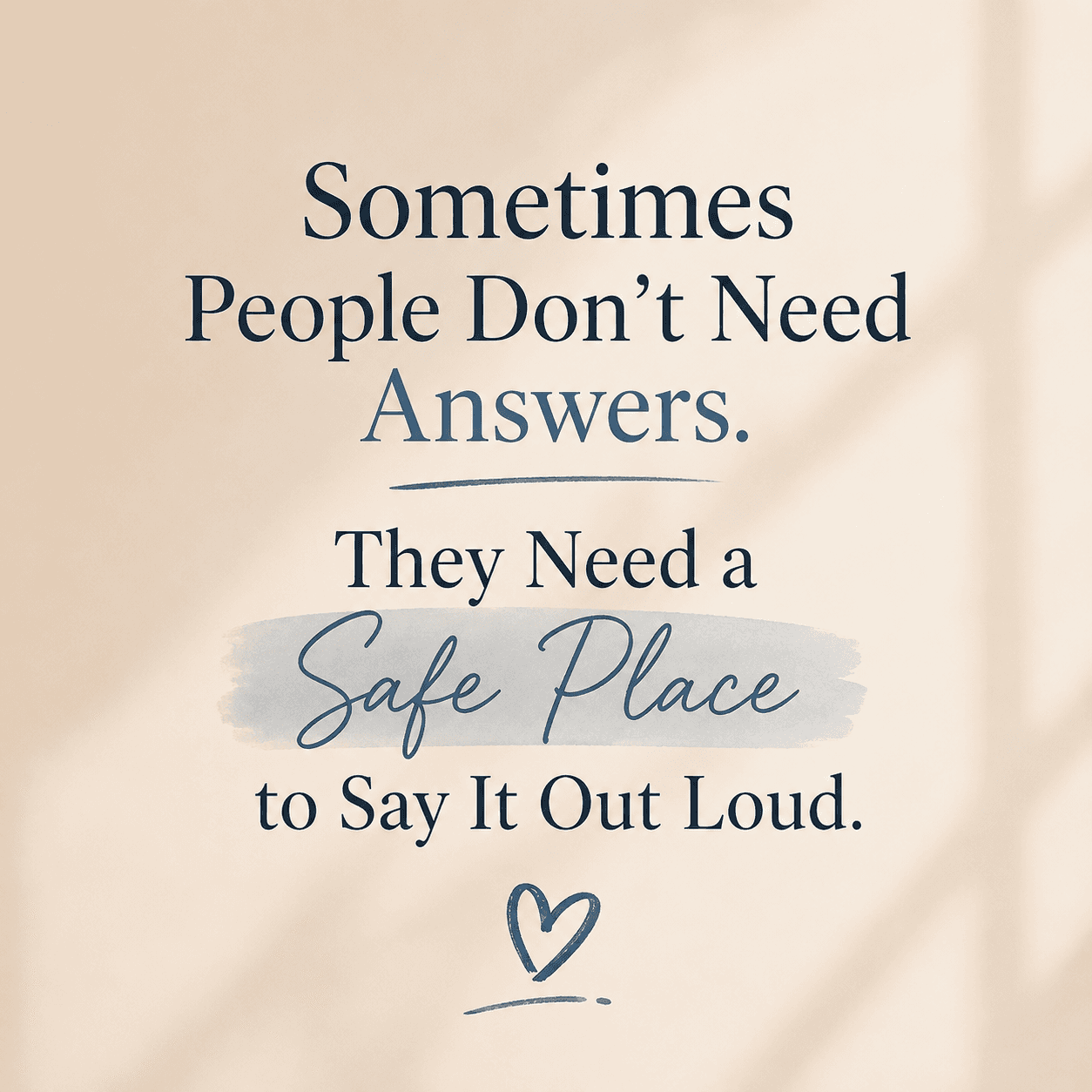
Say it directly before you start: 'I don't need advice, I just need to say this out loud.' Most people default to problem-solving because they want to help — they're not ignoring you, they're just guessing wrong about what helps. Naming it upfront changes the whole shape of the conversation.