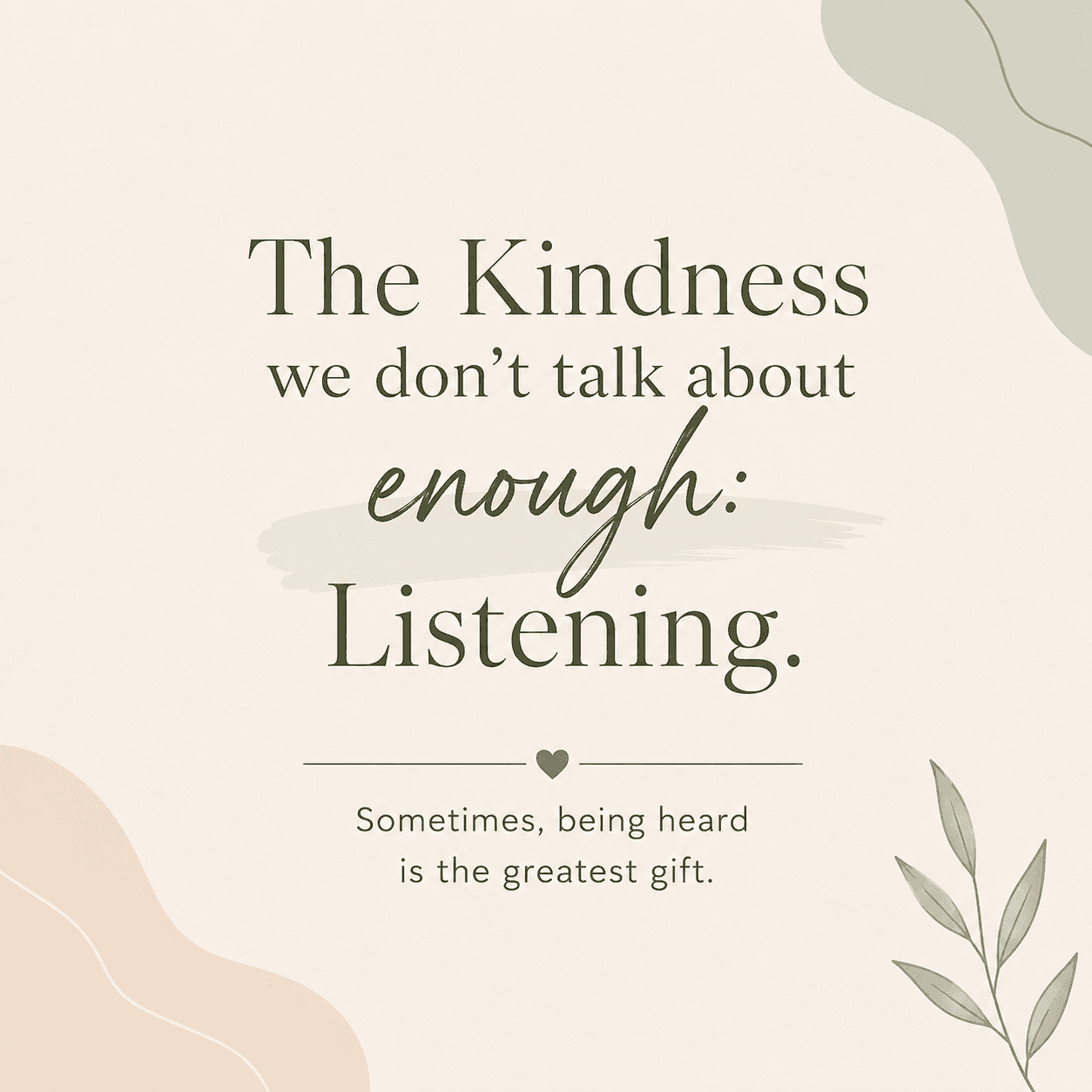
Most of us were taught to respond, reassure, and fix — not to simply stay quiet and receive. This post makes the case that listening is one of the most underestimated acts of kindness available to us, and looks at what it actually takes to do it well.
Listening Isn't the Passive Part
You Don't Need the Right Words
The Quiet Act That Costs Nothing
Before You Offer an Opinion, Offer Your Attention
What does it actually mean to really listen to someone?
It means giving someone your full, undivided attention without planning your response while they're still talking. You're not fixing, not redirecting, not waiting for your turn — you're just receiving what they're saying. That kind of presence is rarer than it sounds, and people feel the difference immediately.
Why do I feel better after someone listens to me, even if nothing changed?
Being heard signals to your nervous system that you're not alone with the weight you're carrying. Nothing about the situation has to change for that to matter — the act of being received by another person is its own relief. It lowers the emotional volume enough to think more clearly.
What if I don't know what to say when someone shares something hard?
You don't have to say much. Silence with presence, a simple 'that sounds really hard,' or 'I'm glad you told me' does more than a rehearsed response. Most people who've just opened up aren't looking for a solution — they're checking whether it's safe to have said the thing at all.
How do I know if I'm actually listening or just performing it?
A useful check: can you accurately repeat back what the person just said — including the feeling underneath it, not just the facts? If you were quietly composing your reply while they were talking, you were probably performing. Real listening leaves you with nothing prepared, which can feel uncomfortable at first.
Can listening actually help someone who's going through something serious?
It can, and often more than people expect — but it has limits worth knowing. Consistent, genuine attention can ease isolation and help someone feel less alone with whatever they're carrying. For serious or ongoing mental health concerns, listening is a support, not a substitute for professional care. If someone is in crisis, point them toward real help.