Most people picture emotional maturity as always being calm, always being right, never getting overwhelmed. That's not maturity — that's suppression pretending to be maturity. The real version is messier, more honest, and much more useful.
What Emotional Maturity Isn't
What It Actually Looks Like
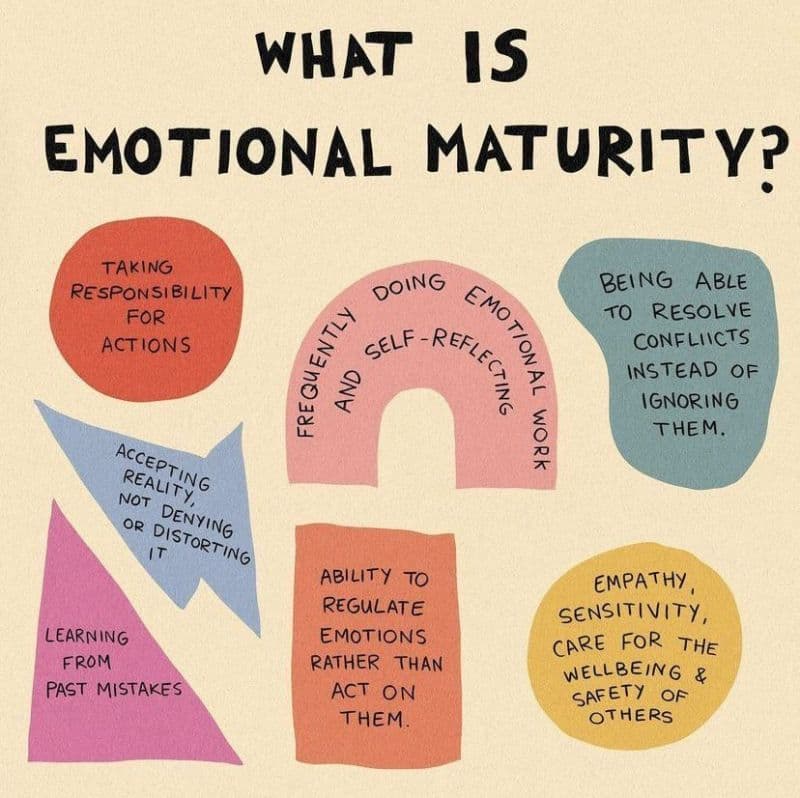
- They notice the reaction as it happens, or shortly after — and can name it accurately rather than defending it as objective assessment.
- They take responsibility for the part that was theirs, including the delivery, without swinging into disproportionate self-blame either.
- They repair. A brief, real acknowledgment of the moment they were less than their best is often the whole intervention. It doesn't have to be elaborate.
- They can hold difficult reality without distortion. Not needing to win the story of what happened. Not requiring other people to agree that they were entirely reasonable.
- They can be uncomfortable without needing to make it stop immediately. Sit with feedback that stings before responding to it. Let a hard conversation take its time.
- They notice how their state is affecting other people, and adjust when adjustment is warranted, without collapsing into people-pleasing when it isn't.
- They repeat mistakes less over time. Not because they never make them — because they actually integrate the feedback.
The Difference From Emotional Intelligence
It's a Practice, Not a Trait
Where LissnUp Fits
Sources & Further Reading
What actually is emotional maturity?
The consistent ability to notice your emotional reactions, take responsibility for them where responsibility is warranted, and choose your response rather than being run by the reaction. Not the absence of difficult emotions — the mature relationship to their arrival. It's a practice, not a personality type.
How can I tell if I'm becoming more emotionally mature?
You notice reactions faster, defend them less, and repair from them more quickly. You can hear feedback that stings without immediately reframing it as unfair. You repeat specific interpersonal mistakes less often. And you probably feel less need to have been right about everything after the fact.
Can emotional maturity actually be developed as an adult?
Yes, and this is well-supported. It's a set of skills — self-awareness, emotion regulation, honest self-reflection, repair — all of which respond to deliberate practice, therapy, and honest feedback from people you trust. Nobody is stuck at their starting point. The practice is uncomfortable and the growth is real.
What's the difference between emotional maturity and emotional intelligence?
Emotional intelligence is the underlying capacity to accurately recognize and understand emotions in yourself and others. Emotional maturity is the reliable translation of that capacity into behavior, especially under pressure. You can be emotionally intelligent and still react immaturely — maturity is the applied version of the diagnostic skill.