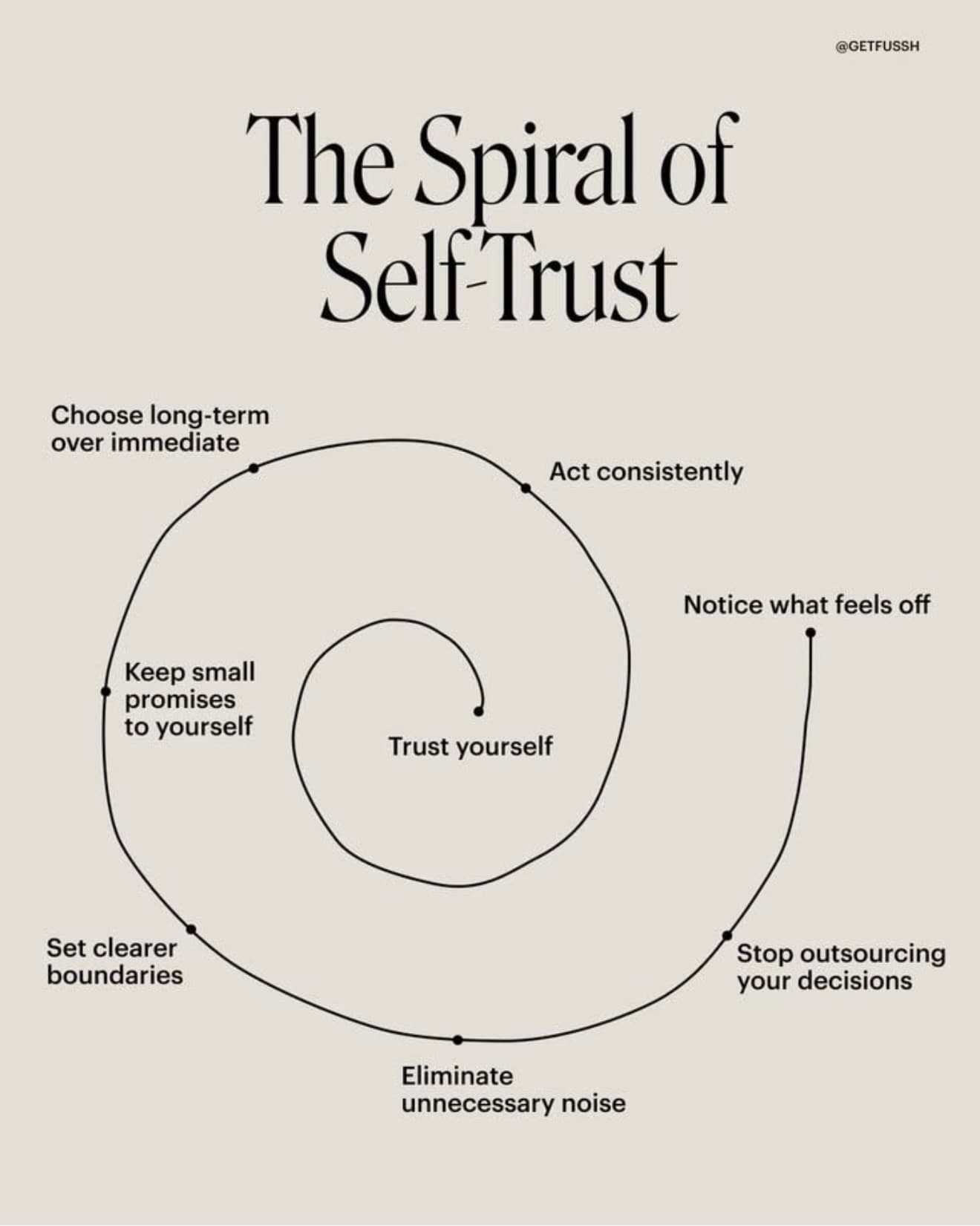
Self-trust isn't a personality trait you either have or don't. It's built one small kept promise at a time — the accumulated behavioural evidence that you can rely on yourself. Which also means it's built, or eroded, in the tiny everyday choices most people don't notice they're making.
Self-Trust Isn't a Personality Trait
The Evidence You Build (Or Erode) Every Day
Where the Spiral Actually Starts
- Following through on the small promises you made to yourself, especially the ones no one else knows about.
- Setting boundaries that reflect what you actually value, not what you'd like to value.
- Choosing the long-term thing over the immediate-relief thing, sometimes, and forgiving yourself when you don't.
- Noticing which situations consistently feel misaligned, and taking that data seriously.
- Taking ownership of decisions rather than looking for someone to sign off first.
The Distinction That Matters
When Self-Trust Was Damaged Early
What is self-trust in psychology?
Self-trust in psychology refers to your confidence in your own judgment, decisions, and capacity to follow through on what you've committed to. It's closely related to self-efficacy — the belief that your actions can influence outcomes — which Albert Bandura's research established as trainable rather than fixed. Self-trust grows through repeated experiences of behavior aligning with intention.
How do I start rebuilding self-trust when it feels completely broken?
Start absurdly small. One modest commitment you make to yourself and actually keep produces a piece of internal evidence that you're reliable. Then another. The goal isn't to feel certain immediately — it's to build a track record, one manageable action at a time. Sweeping resolutions usually fail; small kept promises compound.
Is constantly seeking reassurance from others a sign of low self-trust?
It can be, though it's worth exploring with curiosity rather than judgment. Wanting input from people you trust is healthy. Consistently outsourcing decisions because you don't trust your own judgment can gradually reduce that judgment's reliability further. Notice how often you feel the pull to check with someone else — and try asking yourself what you actually think first, before you ask anyone else.
Does self-trust mean never doubting yourself?
No. Self-doubt is part of being human. The absence of doubt isn't the goal — the goal is consistency under uncertainty. Self-trust is better understood as knowing you can rely on yourself even when you're not sure, that you'll make the call, sit with the discomfort, and keep going. It's a working relationship with your own judgment, not a claim of infallibility.