The wellness internet has mostly ruined 'gratitude' as a word — turned it into forced positivity you're supposed to feel about a bad day. The actual research on it is more interesting and much less annoying. Here's the honest version of what gratitude practice does and doesn't do.
The Problem With Most Gratitude Content
Why the Brain Needs This Kind of Nudge
What the Research Actually Supports
The Practice That Actually Works
When Gratitude Practice Isn't the Right Move
Sources & Further Reading
Does gratitude journaling actually work?
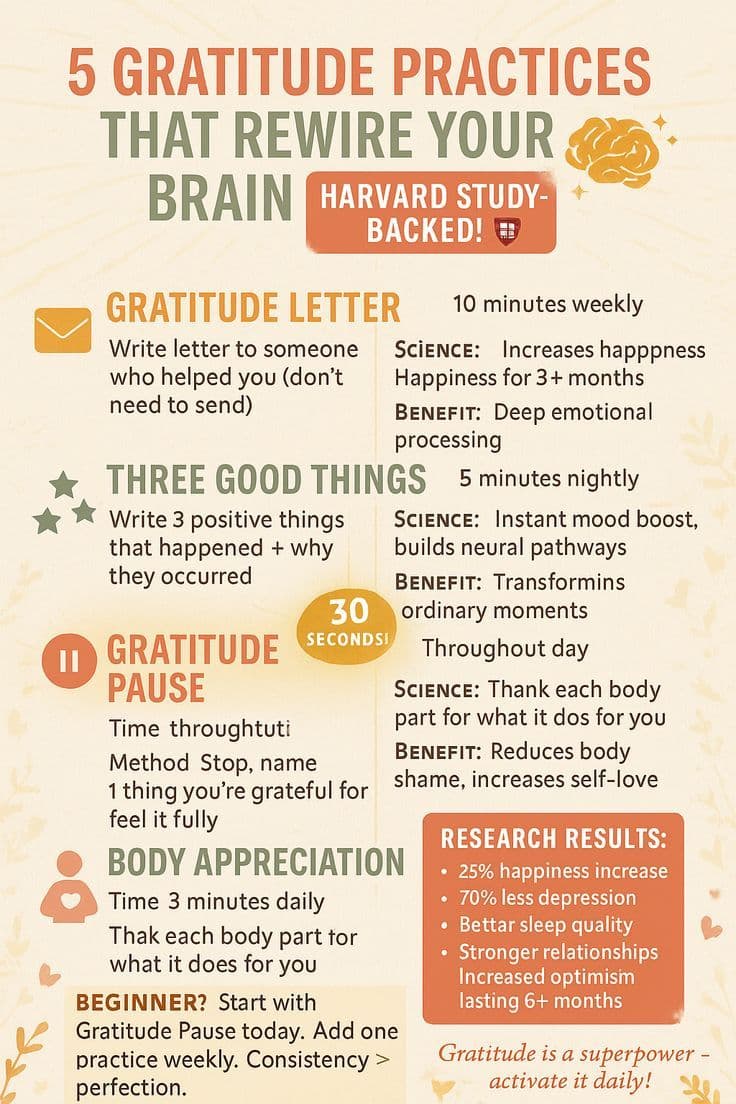
Yes, in a modest but real way, when done consistently over weeks. The research supports small but reliable effects on mood, sleep, and perceived social support. It doesn't work as a substitute for professional care when someone is dealing with clinical depression or anxiety, and it doesn't work when it's being used to override rather than acknowledge negative feelings.
Why does the brain default to negative?
Because in evolutionary terms, missing a threat cost more than missing a positive. Brains that noticed danger disproportionately passed on their genes. This is called negativity bias, and it means we need active practice to give positive experiences roughly the cognitive weight they'd get if we were more balanced by default.
What's the simplest gratitude practice that actually helps?
Three specific things from your day, written down, most days, for at least a few weeks. Specificity matters — 'the walk this morning' beats 'exercise.' Consistency matters much more than duration or intensity. One minute daily beats an elaborate weekly practice.
Can gratitude practice help with anxiety and depression?
It can be a useful supplemental input for mild-to-moderate cases and it doesn't hurt when done alongside other treatment. It is not a stand-alone treatment for clinical depression or an anxiety disorder — and being told it should be can feel invalidating in ways that make things worse. A clinician is the right call for clinical-level presentations; gratitude practice can support that work without replacing it.