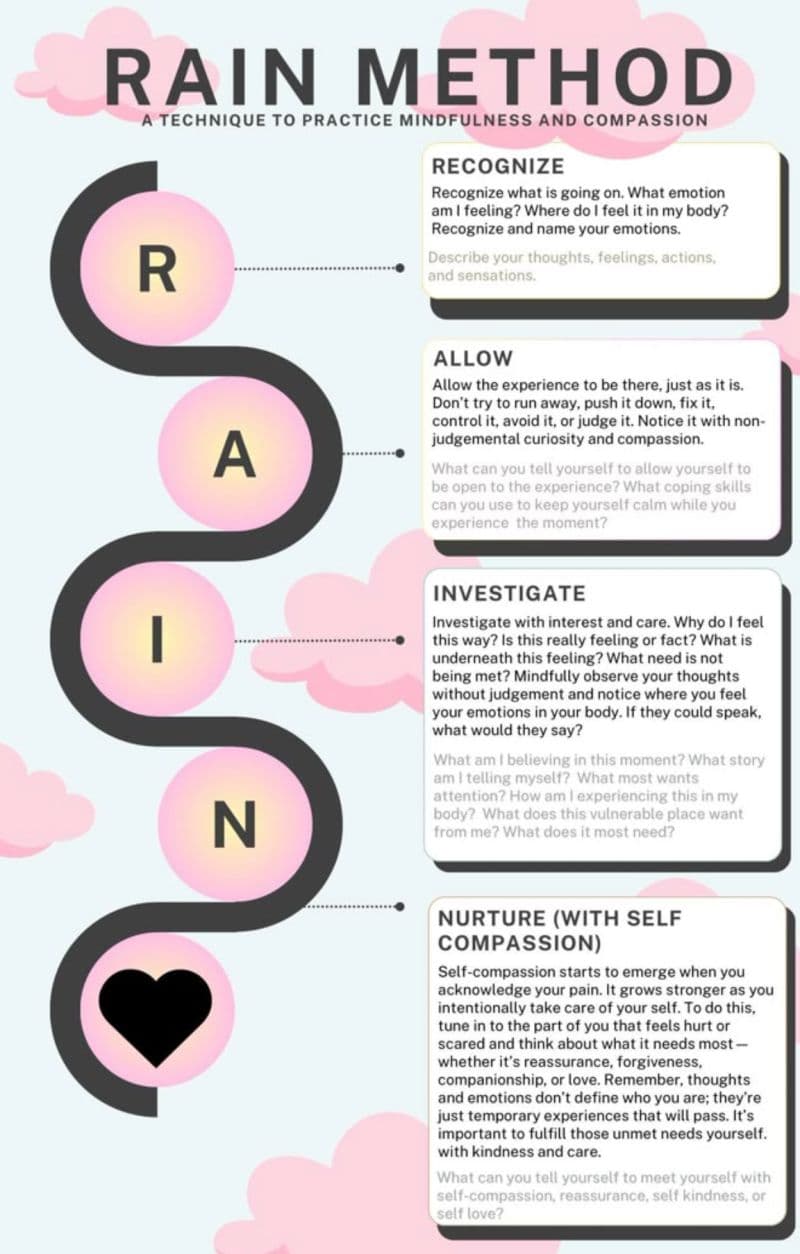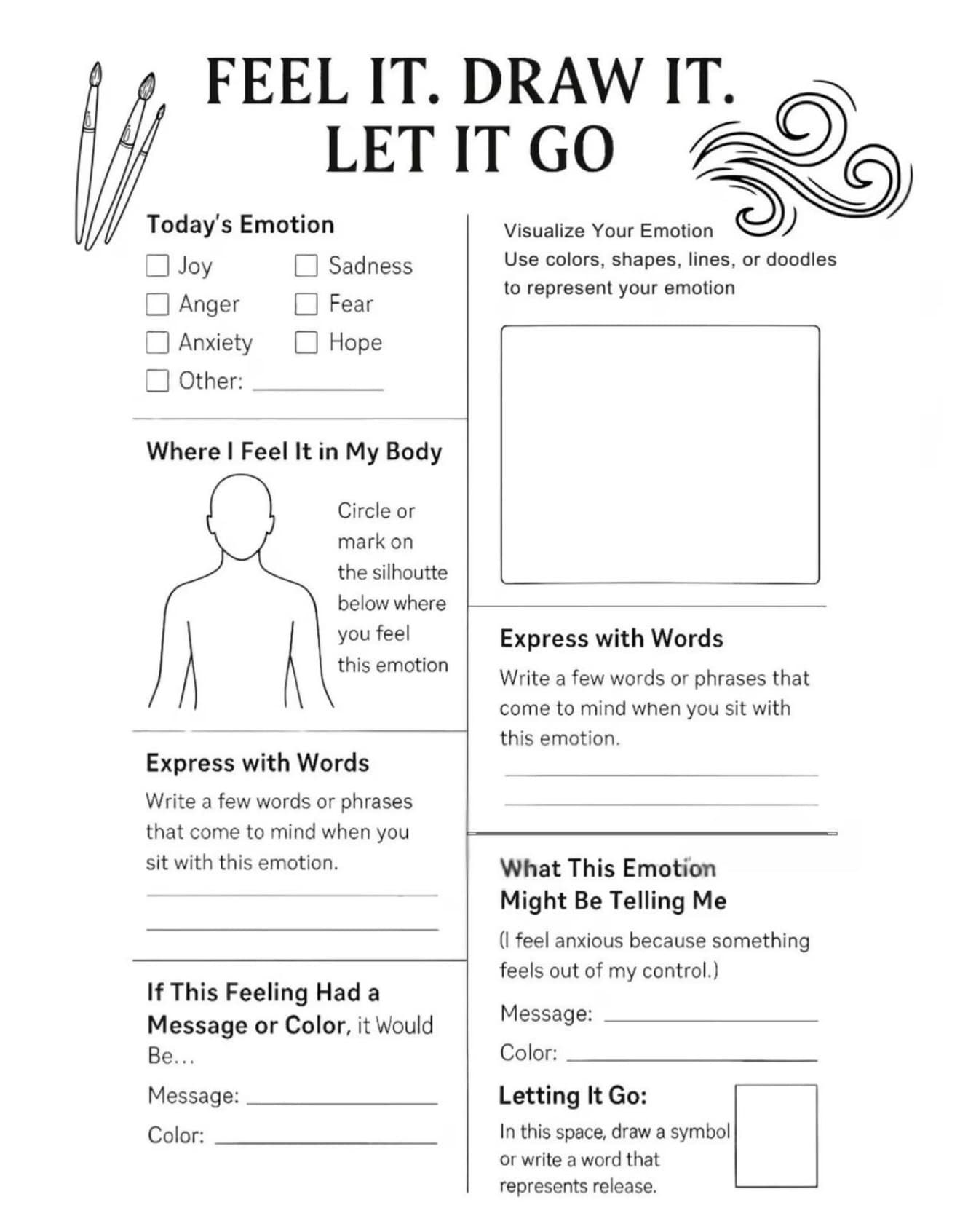
Sometimes a feeling is too big or too vague to put straight into words. This is a short practice for those moments — a multi-step way to name, locate, express, and eventually release an emotion so it becomes something you can work with, not just something happening to you.
When the Feeling Is There and the Words Aren't
Four Ways In When Words Aren't Enough
Draw it
Notice where you feel it in the body
Put it into words
Ask what it might be pointing at
Curiosity Over Fixing
When You Need Somewhere for the Emotion to Land
What is affect labelling and how does it help?
Affect labelling is the practice of putting a feeling into words. Matthew Lieberman's 2007 UCLA fMRI study showed that verbally labelling an emotion reduces activation in the amygdala (the brain's threat-processing region) and increases activation in regulatory prefrontal areas. In plain terms: naming a feeling reliably reduces the feeling's physiological grip. It's one of the more robust findings in the emotion-regulation literature.
How can drawing an emotion help when words won't come?
Because not every emotion arrives in a form language can hold. Drawing gives a feeling a different kind of expression — shape, colour, texture — which can access what words can't reach, especially when feelings are diffuse or overwhelming. It also externalizes the emotion onto paper, which lets you observe it with more distance than you can from inside your own head.
Is noticing where I feel an emotion in my body actually useful?
Yes. The body registers emotional states before the conscious mind consciously catches them — a tight chest, a heavy stomach, a jaw locked without noticing. Paying attention to those sensations helps you notice emotion earlier and more accurately than waiting for the thought to fully form. It also strengthens the mind-body connection over time, which supports emotional regulation more generally.
How is reflecting on what an emotion is telling me different from just analysing it?
Analysing tends to look for explanations or fixes. Listening to what an emotion is signalling is more receptive — asking whether there's an unmet need, a crossed boundary, or a concern that hasn't been voiced. The distinction matters because analysis often becomes argument with the feeling, while listening lets the feeling actually communicate. You're not trying to think your way out of the emotion; you're trying to hear what it's pointing at.