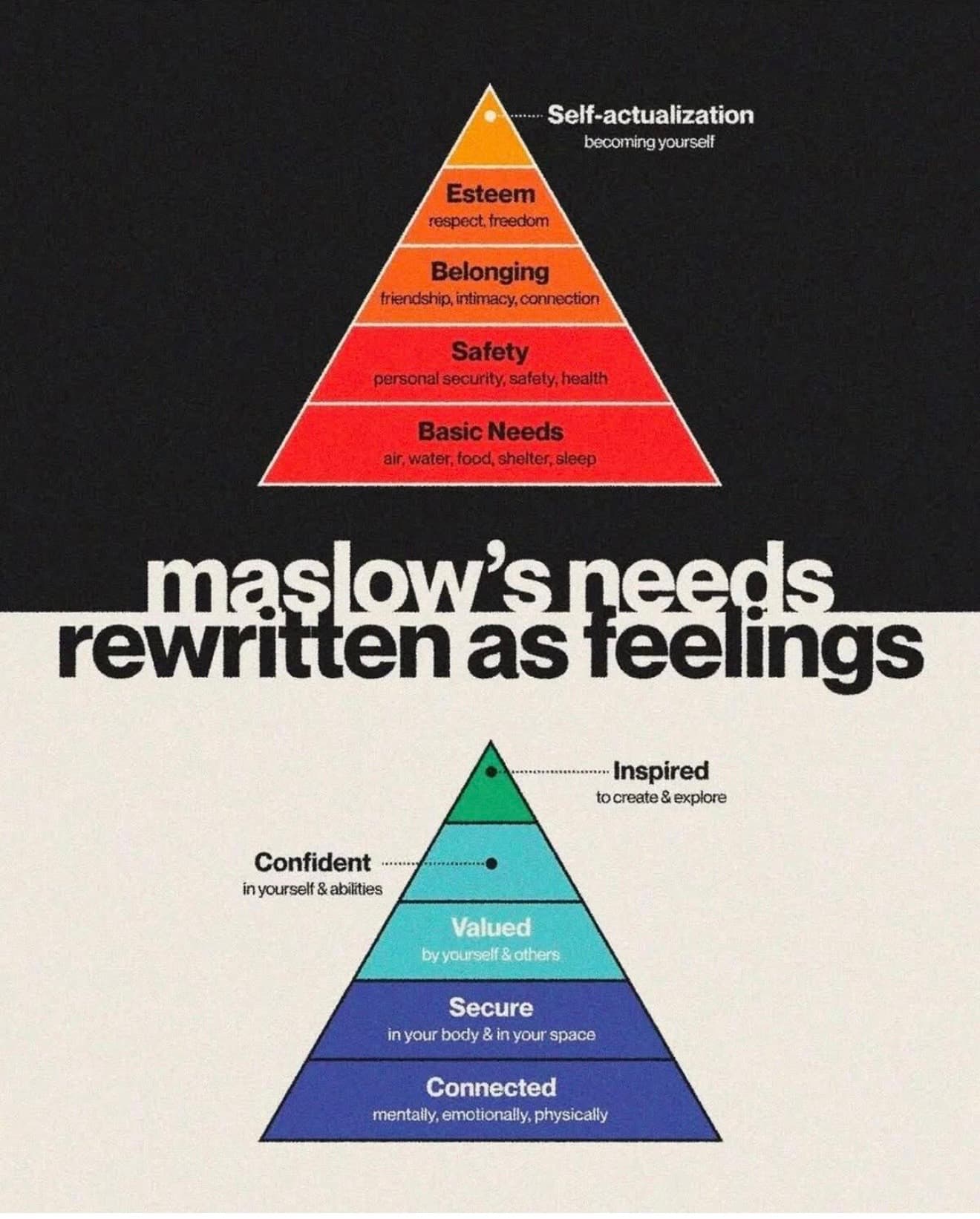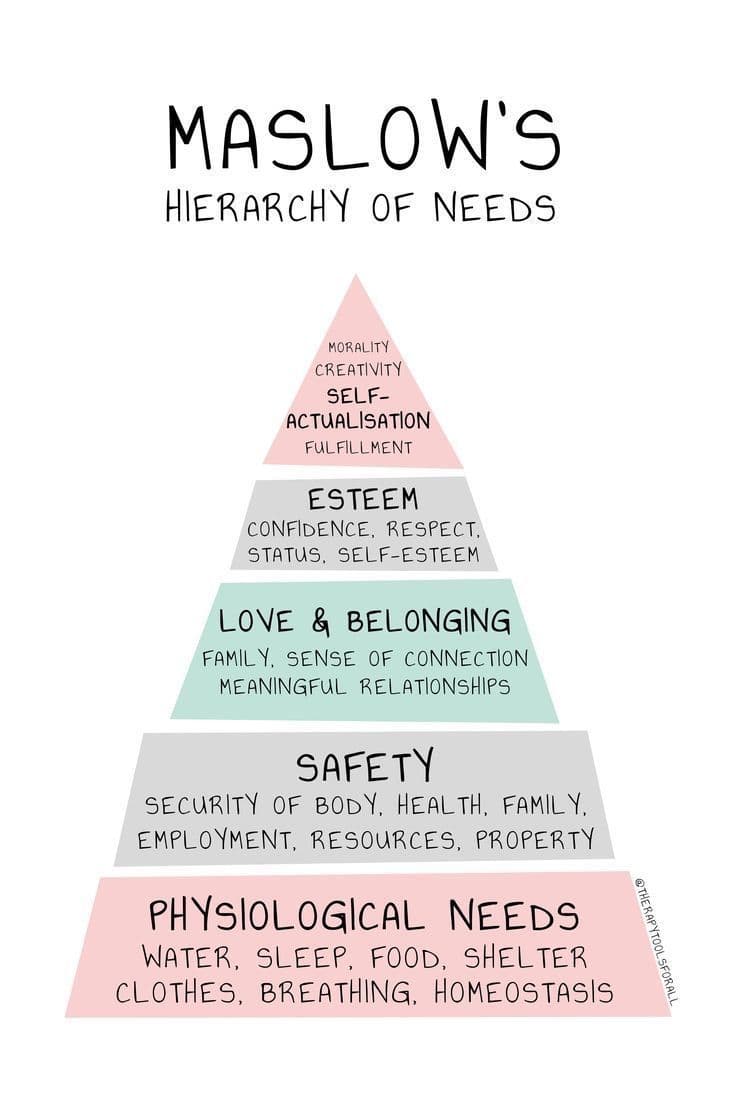
Maslow's hierarchy of needs is one of those things everyone learned in school and no one applies. Used as a real check-in — 'which level of need have I actually been meeting?' — it solves a surprising percentage of the mystery bad days people otherwise try to think their way out of.
The Idea Everyone Learned and Nobody Uses
The Check-In That Actually Helps
- Physiological. Have I eaten a real meal in the last few hours? Am I hydrated? Have I slept enough this week? Have I moved my body today? Am I warm/cool enough? These are boring and they are the answer more often than most people expect.
- Safety. Is there something in my situation that isn't actually safe or stable — financially, physically, in a relationship, at work? Is there a chronic uncertainty running in the background?
- Belonging. When was the last time I had a real conversation with someone who cares about me? When was the last time I felt like I was part of something?
- Esteem. Am I in a period where I'm not feeling competent, valued, or respected in one of the roles that matters to me?
Why the Body Wins Over the Mind Here
When the Check-In Isn't Enough
Where LissnUp Fits
Sources & Further Reading
What is Maslow's Hierarchy of Needs?
A framework proposed by Abraham Maslow in 1943 organizing human needs into tiers: physiological (food, sleep, shelter), safety (stability, security), belonging (connection, relationships), esteem (self-worth, recognition), and self-actualization (living out your potential). The claim is that lower tiers generally need to be reasonably met before higher ones become live drivers. Modern psychology treats the strict tier structure as more contested than the tiers themselves.
How do I actually use Maslow's hierarchy for my mental health?
As a fast check-in on a bad day. Start at the bottom: have I eaten, slept, moved, hydrated? Then safety: am I in a chronically unsafe or uncertain situation? Then belonging: have I had real connection with anyone recently? Then esteem: am I feeling competent and valued in the roles that matter to me? Most mystery bad days trace back to a specific answer at one of these levels.
Why does the body-side of the hierarchy matter so much for mental health?
Because when your basic physiological or safety needs aren't being met, your nervous system stays in a low-grade activated state that cognitive strategies alone can't fix. You can't think your way out of being under-slept or under-fed. Sleep, food, and physical safety have to be roughly in place before higher-level interventions (therapy, mindfulness, mood work) have room to operate.
Why can't I just think my way out of feeling anxious?
Because anxiety has a physiological component that responds to safety signals, not logic. If your body has been reading its environment as unsafe or your basic needs as unmet, the nervous system is doing exactly what it's built to do — staying alert. Fixing the underlying condition (rest, food, actual safety, real connection) usually does more than reframing thoughts. Cognitive work is genuinely helpful, but usually as a supplement, not a substitute for the physical foundation.