Curated by the LissnUp Editorial Team
Fear of Missing Out
Overview
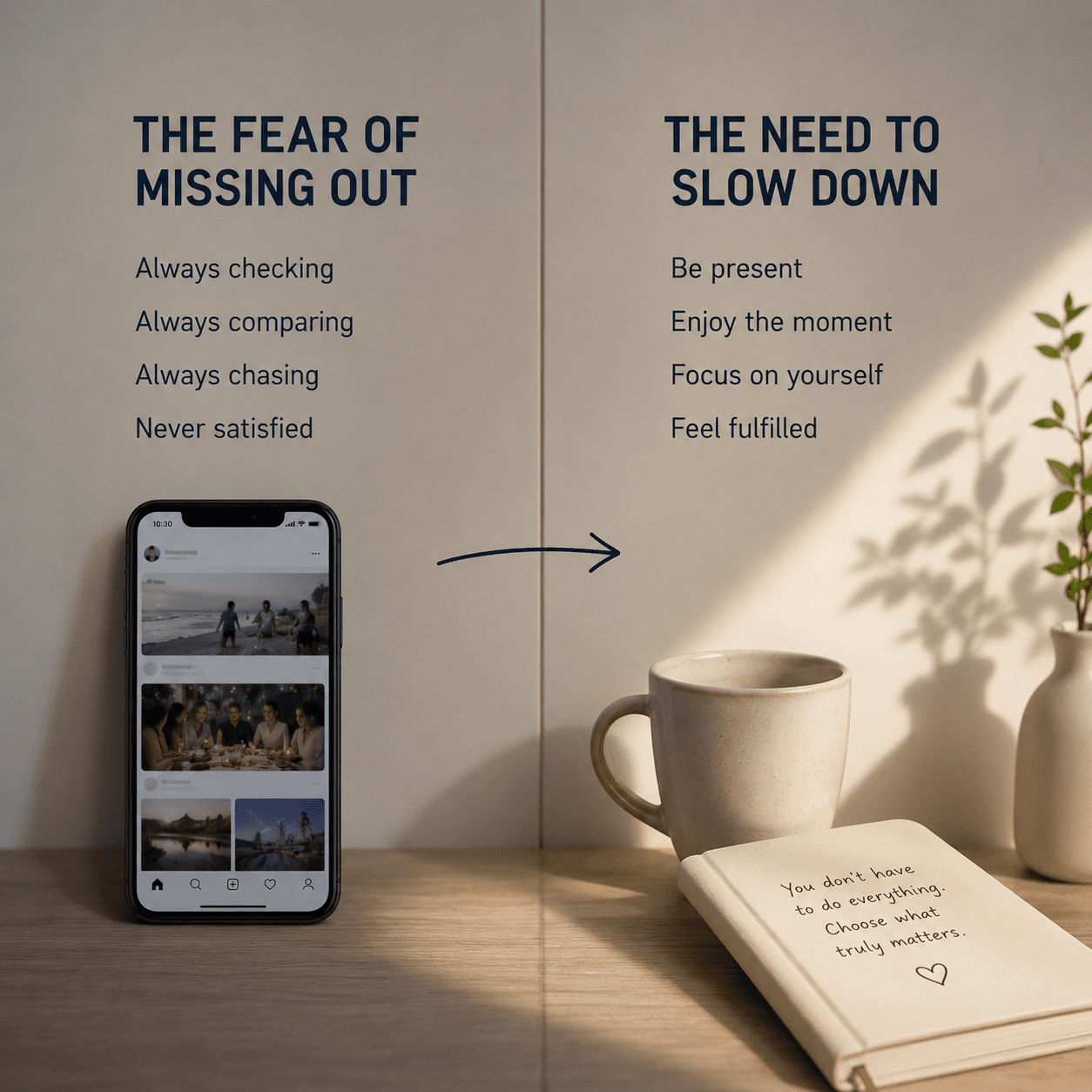
The fear that everyone else is doing something without you — that they're closer, having more fun, moving faster, being included in a way you're not — is what makes social media compulsive in a different way from ordinary scrolling. Ordinary scrolling is entertainment. FOMO is anxiety management. You're not opening the app because you want to see what's there; you're opening it because it hurts more not to. That's a measurable psychological pattern, and social media substantially amplifies it because it makes what everyone else is doing constantly visible. The writing here is about what FOMO actually is, why the medium is designed to trigger it, and what tends to loosen its grip when almost nothing else does. Curated by the LissnUp Editorial Team.







Frequently Asked Questions
What is FOMO and is it a real thing?
FOMO — the fear of missing out — is a real, measurable psychological pattern: anxious preoccupation that others are having rewarding experiences without you. Research shows social media substantially amplifies it because it makes what everyone else is doing constantly visible. It's not a character flaw; it's the predictable result of a medium designed to keep you scrolling.
Why does not checking my phone make me anxious?
Because your brain has learned to expect information from the phone at short intervals, and the absence of it feels like being disconnected from your social world. That's a real anxiety, not weakness. It's also why the first days of reducing checking are the hardest — your nervous system is recalibrating what 'normal' feels like.
How do I stop feeling like everyone's life is more interesting than mine?
Two things help: recognizing that you're seeing everyone's occasional highlights, not their ordinary days (which look a lot like yours), and building specific moments in your own life that don't need to be posted to count. FOMO shrinks when your actual life feels rich enough that other people's doesn't overshadow it.
Is my FOMO a sign I should see a therapist?
Not usually — FOMO is common enough that most people experience it to some degree. It's worth clinical attention if the anxiety is significantly disrupting your sleep, work, or ability to enjoy ordinary things, or if it's paired with persistent depression. For everyday FOMO, peer-support reading and being heard about it are often what helps most.
You're not missing out on this. Book a real conversation.
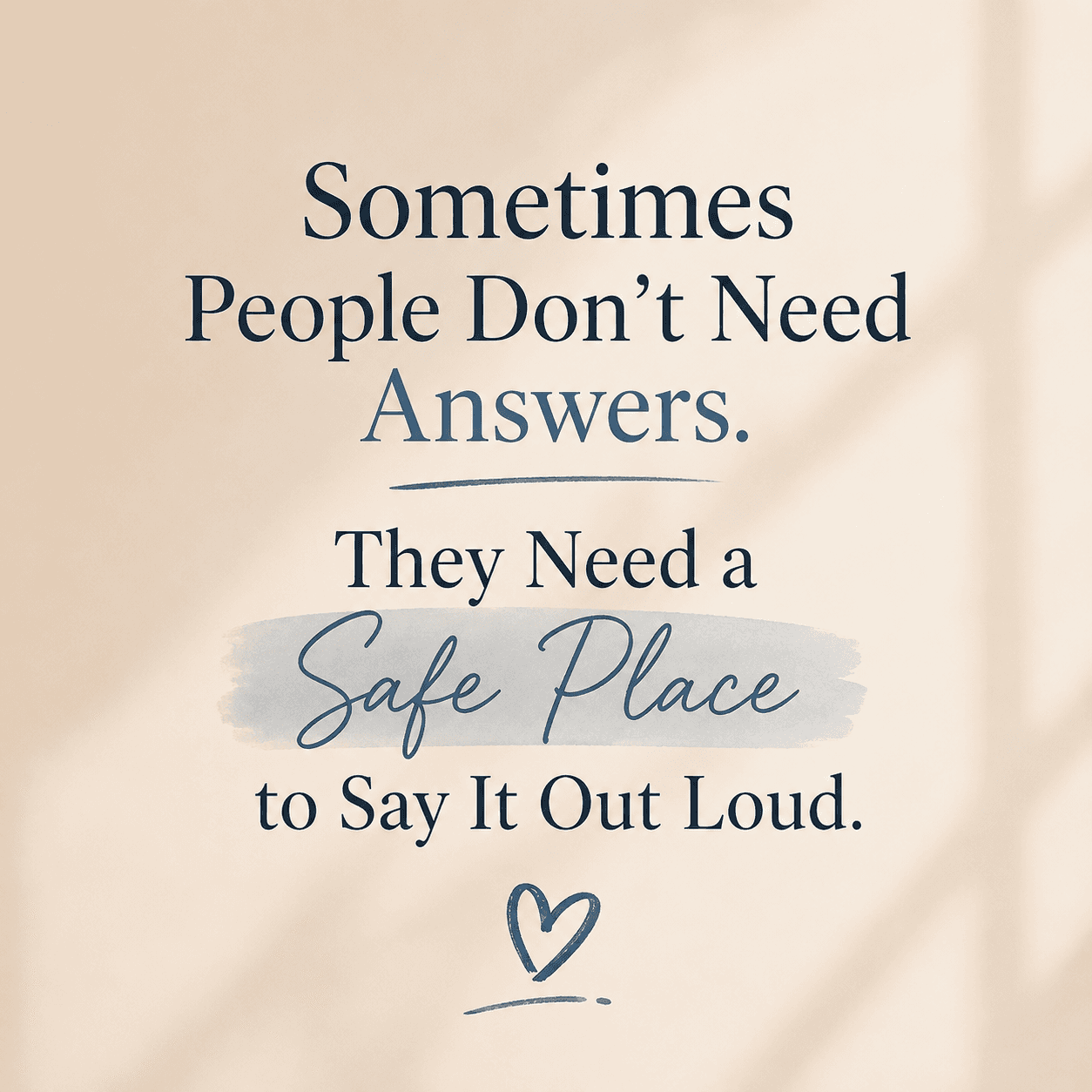
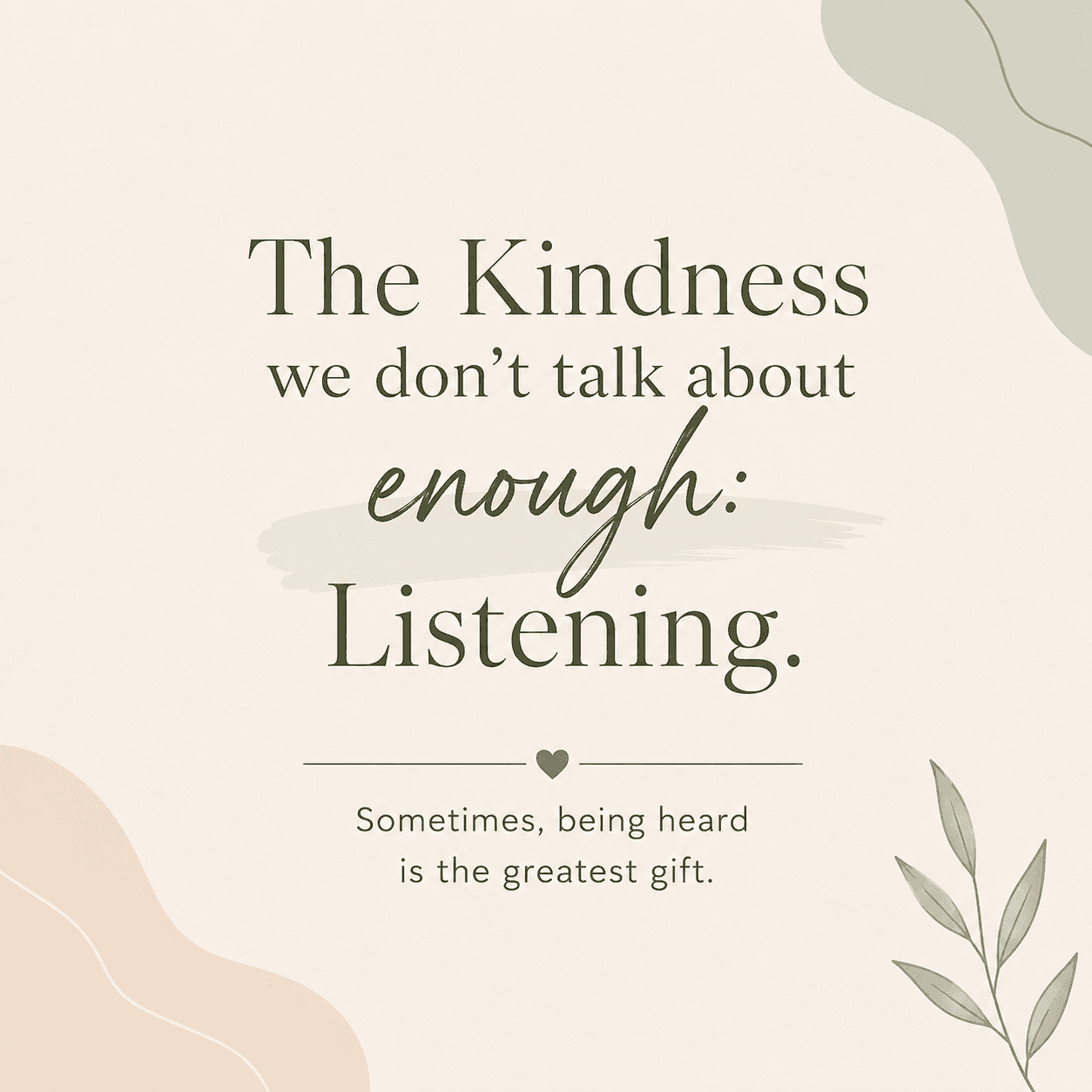
FOMO is the fear that connection is happening somewhere else. LissnUp is connection happening here — a trained listener, 15 minutes, focused entirely on you. Anonymous, confidential, no advice. The kind of attention social media promises and never delivers.