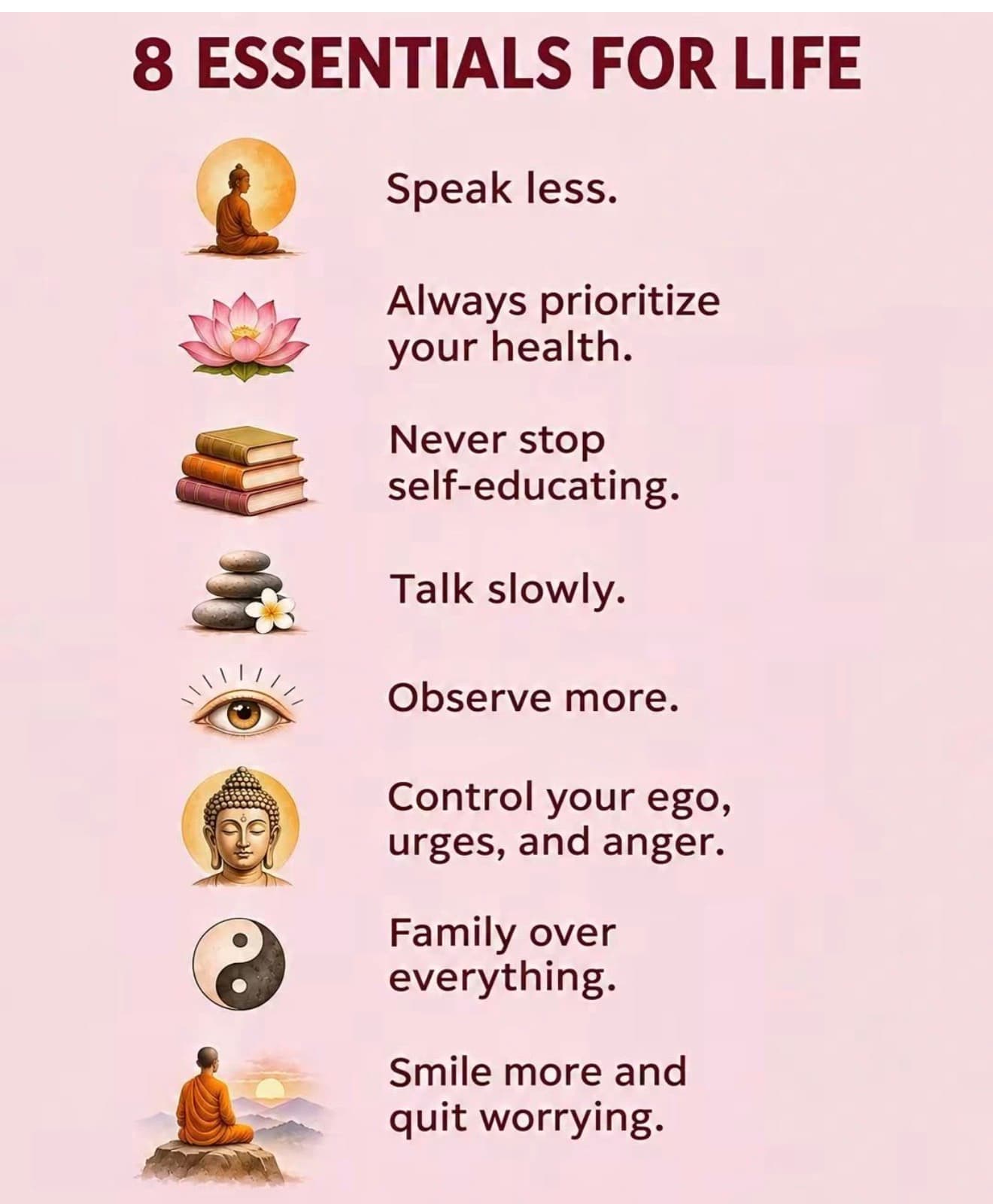
Most of us know, somewhere in the back of our minds, what actually matters and most of us keep deferring it anyway. These eight habits aren't a productivity list; they're a quiet argument for where your attention has been going and where it might go instead.
The Habits That Quietly Shape Everything
Speak Less. Observe More. Slow Down.
Health, Learning, and the Ego You Haven't Dealt With Yet
Family, Gratitude, and What You're Actually Protecting
How do I actually start living with more intention when I'm already overwhelmed?
Start with one habit, not eight. Pick whichever of these feels most neglected right now whether that's sleep, a conversation you've been avoiding, or just slowing down how fast you talk when you're stressed. Small, consistent shifts tend to compound faster than a full overhaul attempted at once.
Why do I keep reacting badly even when I know better?
Knowing and doing are different cognitive processes. Emotional reactions are fast and automatic; the deliberate response takes a half-second longer. That gap is trainable but it requires practice in low-stakes moments, not just intention during the high-stakes ones. The more you pause before responding when nothing much is on the line, the more available that pause becomes when everything is.
Is 'mastering your ego' actually realistic, or is it just a nice idea?
It's more realistic than it sounds, but the goal isn't to eliminate ego it's to notice when yours is running the show. The practical version looks like catching yourself mid-defensive-spiral and asking whether this reaction is about the situation or about being right. That noticing, practiced regularly, is what actually changes behavior over time.
I know family matters, but I'm genuinely too busy to show up the way I want to. What do I do?
The honest answer is that busyness is partly a prioritization story but it's also partly real. You can't manufacture hours. What you can do is make the time you do have more present: one real conversation instead of five distracted check-ins. Presence tends to matter more than quantity, especially to the people who've learned to expect partial attention.