Healing from trauma is not the same thing as being able to talk about it. The Watermelon Technique — a metaphor used in trauma-informed practice — offers a way to think about the different layers of your story and why you get to decide who has earned access to each one.
One Important Framing First
The Myth Worth Naming
The Three Layers of Your Story
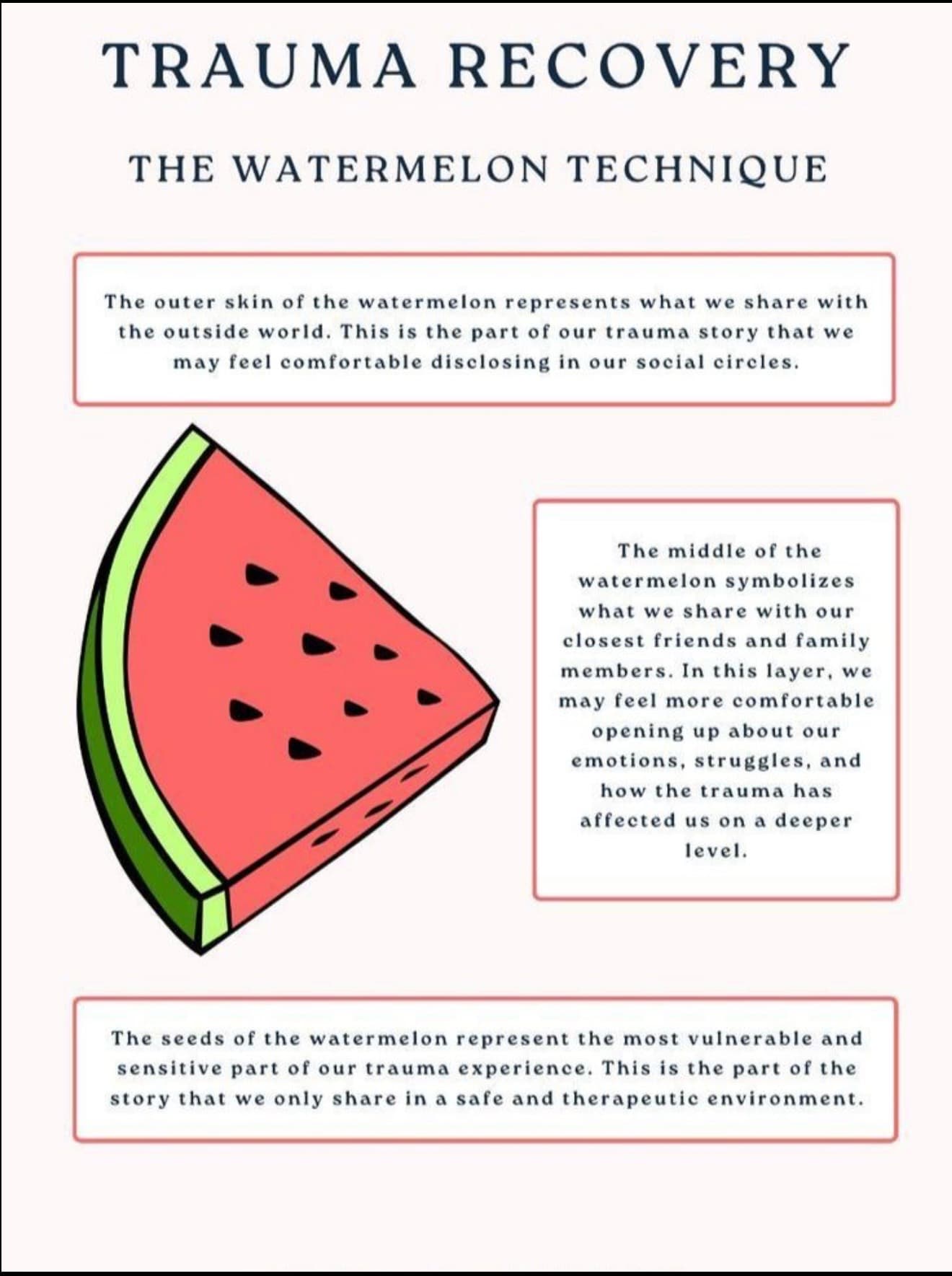
- The rind. The general shape of what happened. The parts you can mention casually or in a public context without it costing you anything internally. 'I had a hard childhood.' 'I've been through some stuff.' The outline.
- The fruit. The specific experiences and emotions you might share with people who've earned some closeness — trusted friends, close family, sometimes a support group. The middle layer, where the story starts having actual substance.
- The seeds. Your most vulnerable material — the details, the shame, the parts that still feel raw. These may only feel safe to explore within a therapeutic relationship or a similarly deliberate, protected space.
Why Disclosure Pressure Actually Damages
Who Has Earned the Seeds — and Where LissnUp Fits
What is the Watermelon Technique in trauma recovery?
The Watermelon Technique is a metaphor used in trauma-informed practice for the layered nature of disclosure. The rind represents parts of your story you're comfortable sharing publicly or casually. The fruit represents the deeper material you might share with trusted people who've earned closeness. The seeds represent your most vulnerable experiences — often best explored in a therapeutic or otherwise emotionally secure space. It's a way of naming that disclosure is layered, not all-or-nothing.
How do I know how much to share about my trauma?
There isn't a universal rule, and anyone who gives you one is probably wrong. A useful starting point: notice how you feel before, during, and after sharing something. Does the sharing leave you feeling relieved, or does it leave you exposed and destabilized? Feeling in control of what you share, with whom, and at what pace is a well-established piece of trauma recovery. If a particular relationship or setting consistently pressures you to disclose more than feels safe, that pressure itself is important information.
Is staying quiet about trauma a sign that I'm not healing?
No. Choosing not to disclose your most vulnerable material publicly isn't avoidance — it can be a real form of self-protection that supports healing. Recovery is not measured by verbal openness. It's measured by whether you're integrating what happened, whether you have agency over your story, and whether you have relationships that are safe enough to process at whatever pace you need. Silence about the deeper layers is often a sign that you're being appropriately protective, not stuck.
Is feeling pressured to share my trauma a sign that my environment isn't safe?
It can be. Trauma-informed care consistently emphasizes that safety and control over disclosure are core to meaningful recovery. If you regularly feel pressured to share more than feels comfortable — in a relationship, a support group, or a workplace — that pressure is worth examining. Healing happens in environments where you're met with patience and respect for your pace, not with expectations about openness. Anyone treating you otherwise, however well-meaning, is not operating in a trauma-informed way.